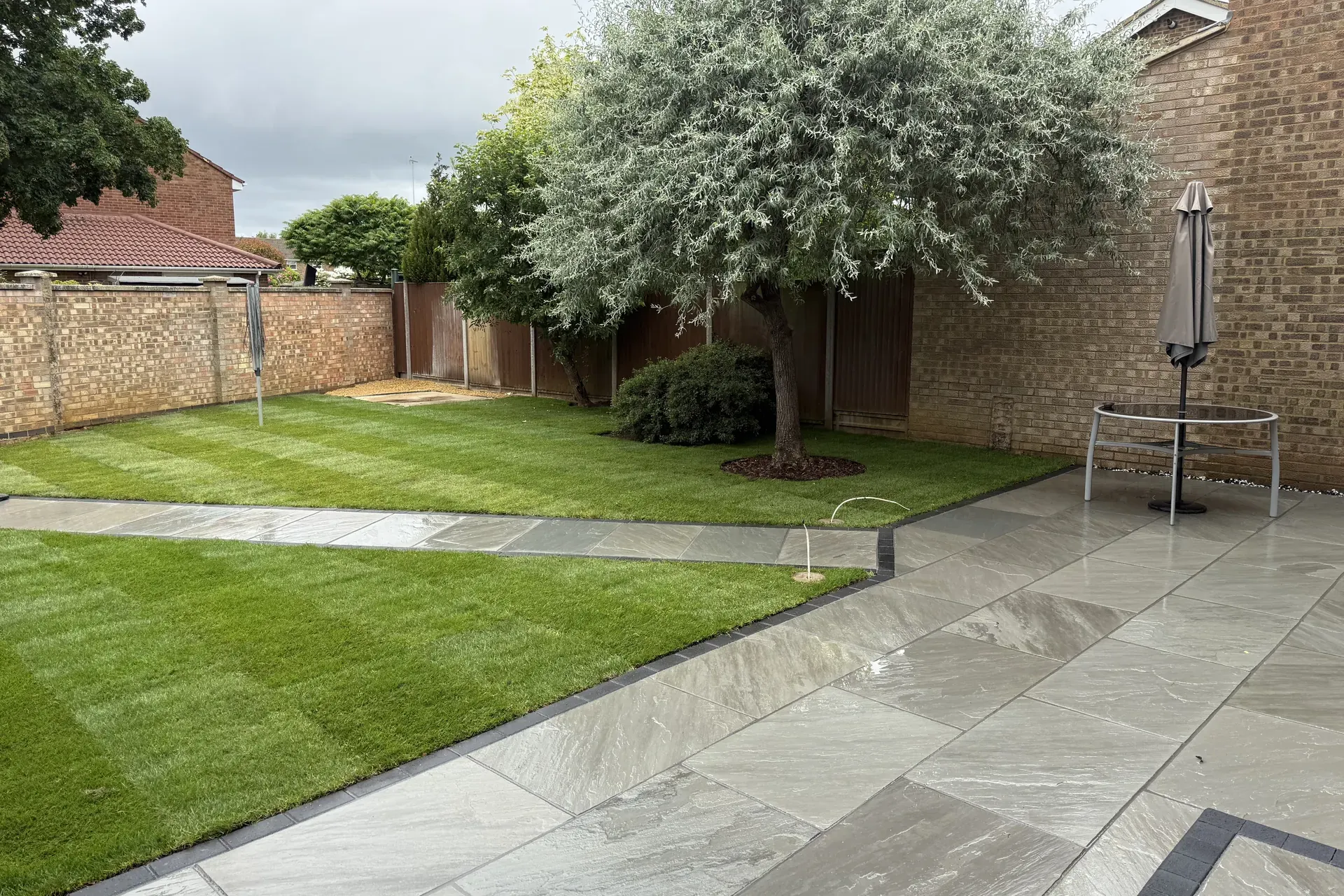
An Indian sandstone patio is warm, natural and hard-wearing, and it suits most houses. The catch is that it's porous, so it takes on water and can go green or mossy without regular cleaning. Pick your colour with that in mind, have it sealed, and it can still look good years later.
Indian sandstone is one of the stones we lay most often, from a grey riven patio in Leighton Buzzard to 80 square metres of Autumn Brown on a raised terrace in Chalfont. But it isn't a stone you can forget about, and it's better to know that before it goes down.
What does Indian sandstone look like after a few years?
New sandstone has a lot of variety in it. No two slabs are quite the same shade, and a riven (naturally split) finish has a gentle ripple you can feel underfoot. That variety is why most people choose it.
Over the first few months it weathers in. The colours soften a little, and you may see white patches where lime from the mortar works through. They usually fade on their own with the rain.
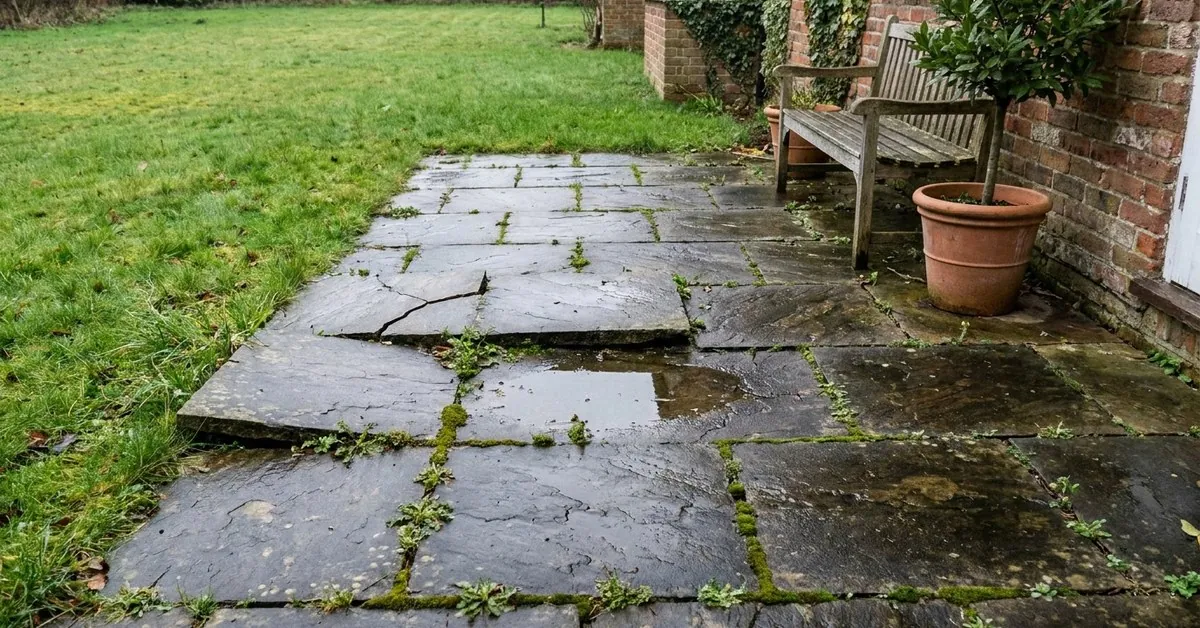
After that, how it looks depends almost entirely on how it's looked after. Kept clean, it can still look good years later. Left alone, it picks up green and black growth, especially in shade and around the joints.
Which colour of Indian sandstone should you choose?
These are the three our clients pick most:
| Colour | What it's like | Living with it |
|---|---|---|
| Kandla Grey | Silver to charcoal greys, cool and modern | The most popular, but it's the lightest. Dirt and green growth show up first, so it needs the most cleaning |
| Autumn Brown | Warm browns, buffs and rust tones mixed together | Hides dirt well. Suits red brick and older houses |
| Raj Green | Grey-green with brown and rust flecks | Also forgiving. Sits well next to planting and lawn |
Grey is still a good choice. Just know that a light stone shows everything. If the patio is shaded, under trees, or you'd rather clean it less, one of the darker two is the easier life.
Hold a sample up against your house, too. Grey suits render and modern brick. Browns and greens tend to sit better with older, warmer brickwork.
Does Indian sandstone go green, and how much upkeep does it need?
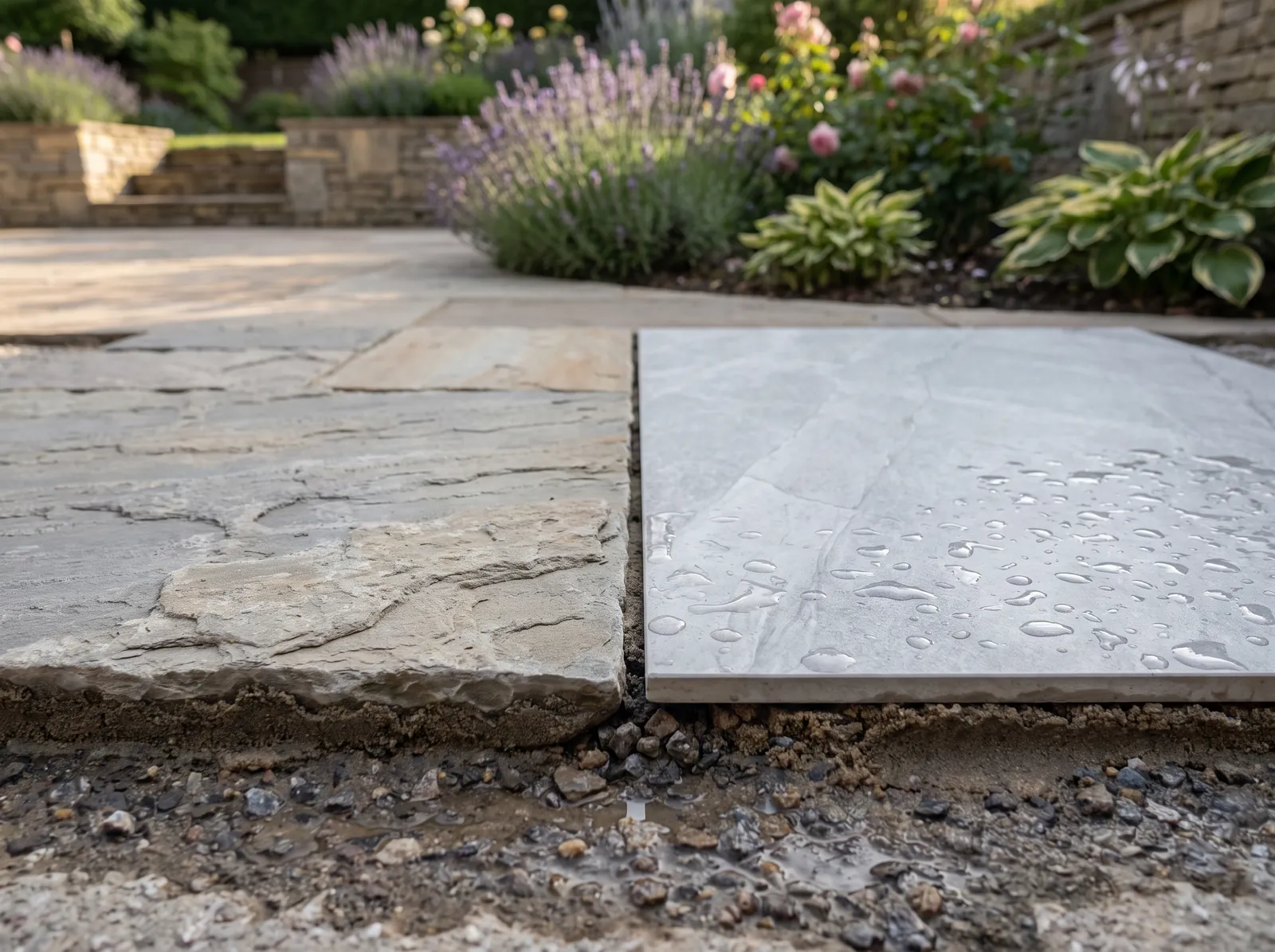
Yes, it can. Sandstone is porous, so it soaks up water, and damp stone in a shady spot is where moss and algae grow. That's normal for natural stone. It's a cleaning job, not a fault.
It's the biggest difference from porcelain, which barely takes on water at all. If low upkeep matters more than the natural look, our sandstone or porcelain comparison is worth reading first.
The routine is simple:
- Sweep it regularly, and clear leaves before they sit and stain.
- Wash it with water and a stiff brush. Soapy water is the safest way to clean it, says Marshalls.
- Once or twice a year, use a patio cleaner made for natural stone to clear green or black growth.
- Never use acid or brick cleaners. They can stain sandstone for good.
- Go easy with a jet washer. Held too close, it can strip the face off the stone.
- Move pots and mats now and then, or they leave marks.
Should you seal an Indian sandstone patio?
We'd say yes. A sealer soaks into the stone and makes it much harder for water, moss and stains to get in. It doesn't make sandstone maintenance-free, but it makes it far easier to keep clean.
We recommend it on every sandstone patio we lay, because our name is on the work. It costs extra, and some people would rather not, which is their choice.
Timing matters. The stone needs a few weeks to dry right through after it's laid, then a dry, mild day to seal. Sealing damp stone traps the moisture in.
What makes a sandstone patio last?
The stone is tough. When a sandstone patio fails, it's almost always what's underneath.
In Harpenden, we were called to a stone patio another firm had laid only a year before. It was already sinking into the garden. When we lifted it, the sub-base (the packed stone layer it sits on) was 20mm at most, and in places bare mud. We relaid it on a proper base, and we explain the warning signs in why patio slabs sink.
Here's what goes under ours. On the Leighton Buzzard patio we also back-primed every slab, painting a bonding coat on the underside so it grips the mortar bed.
What's under one of our sandstone patios
- Sandstone20mm
The surface you see. A natural split face on top, laid with a gentle fall.
- Mortar bed40mm
A full bed under the whole slab, not dabs at the corners. No hollow spots to crack or rock.
- Sub-base100mm
MOT Type 1, a crushed stone that packs down hard, compacted hard to give the patio a firm base.
- Membrane
A fabric sheet that stops the soil working up into the stone.
- Dug-out ground
Taken down to firm soil before anything goes in.
What we'd do
Choose the colour for your garden, not the showroom. Light grey looks crisp on a sample board, but in a shady corner a darker stone looks better for longer.
Then seal it once it's dried out, and keep to the routine above. A quick brush now and then does more than one big clean.
And ask whoever lays it what goes underneath, and how deep. A full bed on a proper base is what lets the stone do its job. It's the same standard on every patio we design and build.
Questions people ask
Is Indian sandstone slippery when wet?
A riven sandstone has a natural texture, so it grips well underfoot. Like any paving, it gets slippery when it's covered in moss or algae, which is another reason to keep it clean.
Does Indian sandstone fade?
It mellows a little as it weathers, especially in the first few months, and many people like that. If you want the colour to stay exactly as it was on day one, porcelain holds its colour better.
How often should sandstone be sealed?
Sealers wear off over time, so it will need redoing every few years. How often depends on the product and how much wear and weather the patio gets. Follow the sealer maker's guidance.
Is Indian sandstone ethically sourced?
It can be, but it's worth asking. There have been serious concerns about working conditions in some Indian quarries, and the Ethical Trading Initiative has worked with UK and European importers to improve them. Ask your supplier where the stone comes from and how they check it.