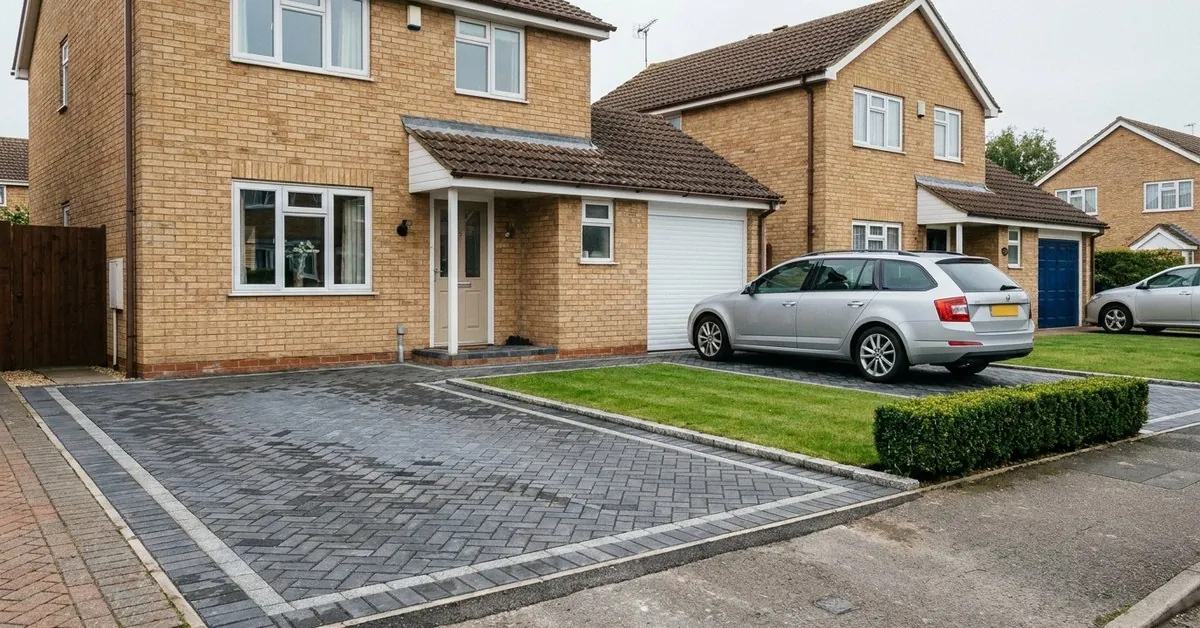
A new driveway can add value, mostly where parking is tight and when it's built properly and legally. But nobody can honestly tell you it adds a set percentage. What a drive reliably does is show the house has been looked after, and that's the first thing every buyer sees.
"Will it add value?" comes up on a lot of our driveway visits, usually from someone who's thinking of selling in the next few years. It's a fair question when you're spending real money on the front of the house.
How much value does a driveway add?
Search the question and you'll find confident figures: 5%, 10%, sometimes more. Most trace back to a handful of surveys and press releases, copied from site to site until they look like fact. None of them measured what a drive does to the price of your house.
Better research tells a narrower story. In 2018 the Federation of Master Builders and the HomeOwners Alliance asked builders and estate agents in seven parts of the UK what common projects would add to a typical home. For Surrey, the estimate was that a new driveway could add £13,354 to an average house. That's one agent's estimate, for one county, eight years ago. It shows a drive can pay back in the south. It doesn't tell you what yours will do.
| What you'll read | Where it comes from | How much to trust it |
|---|---|---|
| "A driveway adds 5 to 10%" | Press releases and websites quoting each other | Very little. No one measured it |
| A new drive could add over £13,000 in Surrey | A Surrey estate agent's estimate for the FMB and HomeOwners Alliance, 2018 | Some. A real agent, but an estimate, and it varies by area |
| Buyers judge a house from the outside | Surveys of buyers | Directionally right, and it matches what agents say |
| What your house will sell for | A local estate agent who knows your road | The answer to trust |
When does a drive add the most?
Where parking is hard. On a road where everyone fights for a space, a house with its own drive stands out.
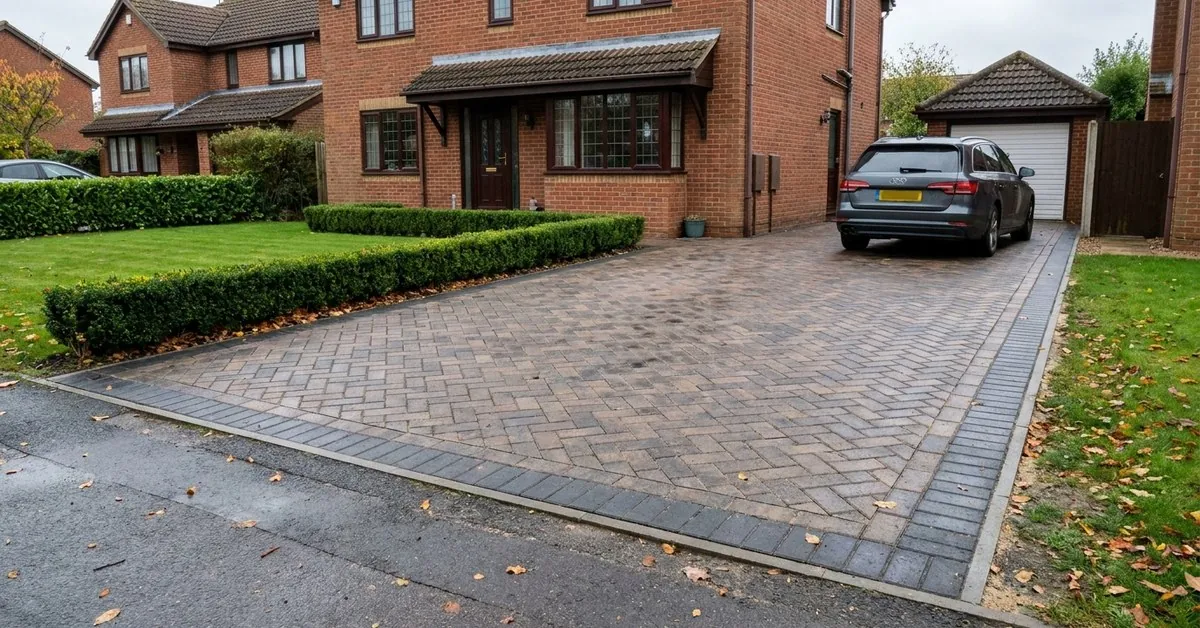
On a driveway extension in Milton Keynes, the drive took two cars, and four people in the house each had a car. We took it over to the side of the house in matching block, so it now parks more of them off the road. That's the kind of change buyers notice, because it solves a problem they'd have every day.
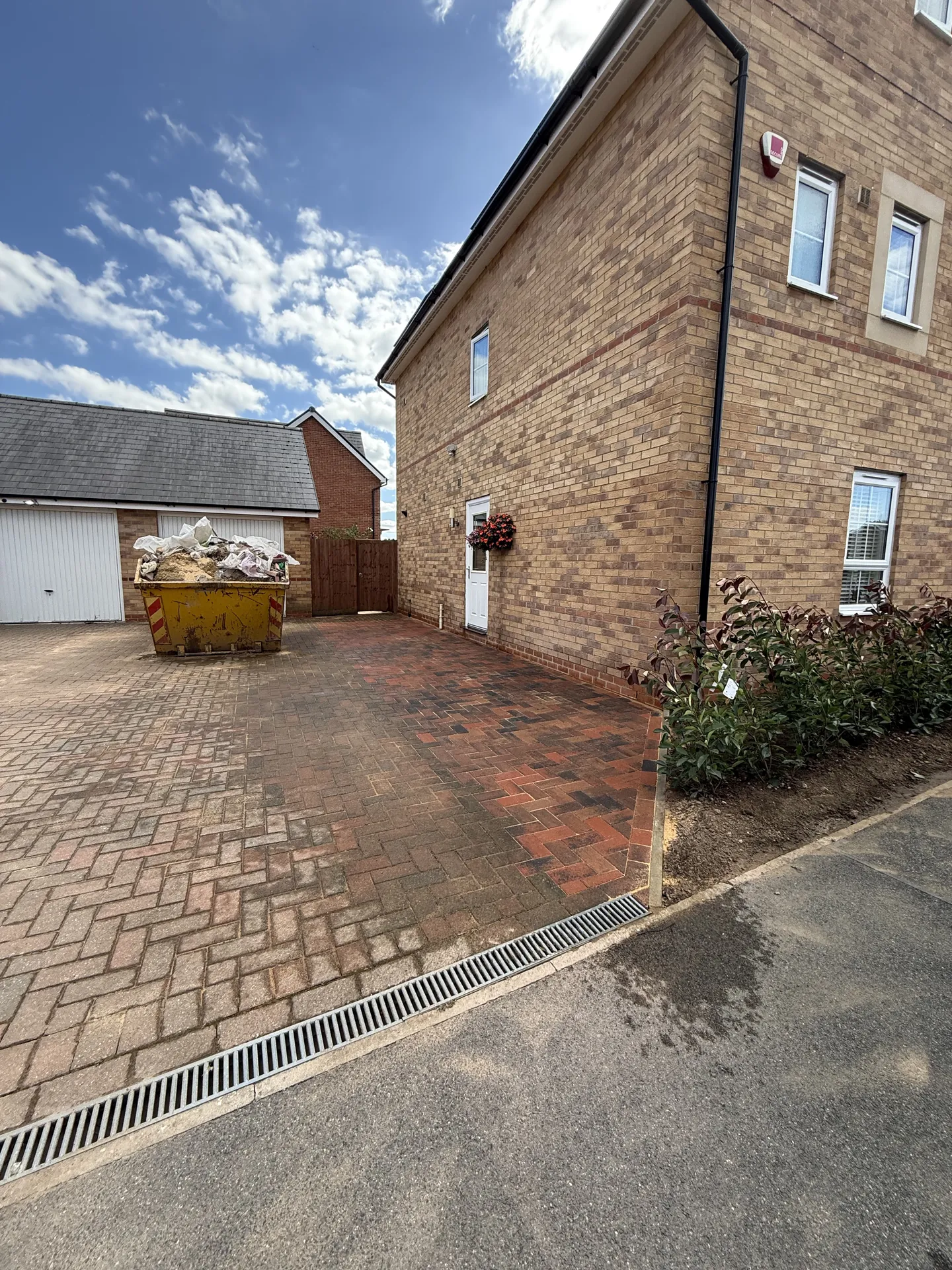
A drive adds least where it was never a problem. If your road has plenty of space, or you already have a sound drive that just needs a clean, a new one gives you a nicer house to come home to, not a better sale.
Does kerb appeal really make a difference?
Yes, though not in a way anyone can put a number on. The front of the house is the first thing a buyer sees, online and on the day of the viewing. A cracked, weedy drive with a puddle in the middle tells them to look for other jobs that haven't been done.
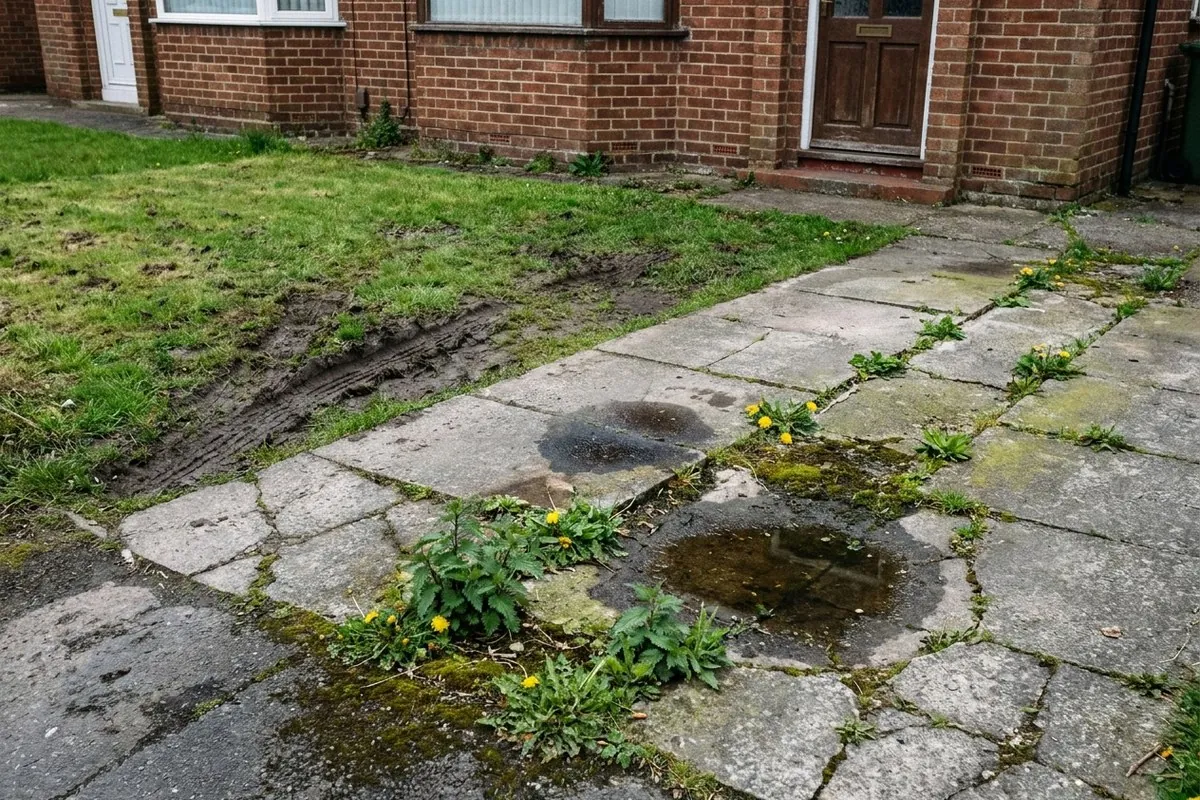
A tidy, well-built drive says the house has been looked after. That won't add a set amount to the price, but it can help it sell.
What does a driveway need to count?
A drive only helps if it's legal and it lasts. Three things matter:
- A dropped kerb. Driving over the pavement to reach your drive is illegal without one, and you apply to your council for it, according to the Planning Portal. On an A, B or C road, it usually needs planning permission too. Bedford Borough Council's guidance is a good example. Check with your own council.
- The right surface, or the rain going somewhere. Paving more than 5 square metres of a front garden needs planning permission unless the surface lets water through, or the rain runs off onto a lawn or border, the Planning Portal says. Permeable block paving and gravel are the usual ways round it.
- Built to last. A drive that dips or rocks within a few years is a cost to the next owner, not a selling point. What's underneath decides that, which we explain in what makes a block paving driveway last.
Keep the paperwork too: the council's dropped kerb approval, and any guarantee. Our guarantees go with the house. If you sell within the guarantee period, the cover passes to the new owner.
Is it worth putting a drive in before you sell?
Only if parking is a real problem on your road, or the drive you have is putting people off. If the drive is sound, cleaning it, weeding the joints and tidying the edges does most of the job, for much less.
If you're staying a few more years, you'll use the drive every day, and any value it adds when you sell is a bonus.
What we'd do
Ask a local estate agent first. They can tell you what off-street parking is worth on your road, which beats any national figure, including the ones above.
Then build it for the way you live, not for a percentage. We'd never tell you a drive will pay for itself, because no one can promise that. What we can say is that a drive built properly, with the dropped kerb sorted and the water planned for, is one a buyer won't have to worry about.
More about how we build drives, and the finishes we lay, is on our driveways page.
Questions people ask
Does a driveway add value to a house?
It can, mainly where parking is hard to find. But the figures you see online, like "adds 10%", aren't based on measuring what drives do to sale prices. A local estate agent can tell you what off-street parking is worth on your road.
Do I need planning permission for a new driveway?
Not if it uses a permeable surface, or if the rain runs off onto a lawn or border. Paving more than 5 square metres of a front garden in a surface that doesn't drain needs permission, according to the Planning Portal.
Do I need a dropped kerb?
Yes, if you drive over the pavement to reach your drive. You apply to your council, and on an A, B or C road you'll usually need planning permission as well.
Does the guarantee pass to the new owner if I sell?
With us, yes. If you sell within the guarantee period, the cover goes with the house.