Ask every landscaper the same questions: what exactly the price includes, how the ground underneath will be built, whether the price is fixed, what's guaranteed in writing, and who you're actually contracting with. Ask for the answers in writing. A good firm will be glad you asked.
Most people have never hired a landscaper before, and it's hard to tell a job that will last from one that only looks the part on the day it's finished. "How do we know who to trust?" is one of the questions we hear most at a first visit.
Here are the questions we'd ask, if we were in your shoes. Ask them of everyone who quotes, us included.
What should a landscaping quote include?
Is it a written proposal, or just a number? A figure in a text is easy to change later. A written proposal means everyone knows what's included before any money changes hands.
Does it list the work, stage by stage? You want each stage in plain English: the dig, the base, the surface, the edges, the drainage, the clearing up. If a quote is vague, that's usually where the surprises are.
Is the price fixed? Citizens Advice explains the difference simply: a quote is a fixed price, and an estimate is a rough guess, so you might end up paying more. Ask what could change the number once the ground is open, and whether that's written into the agreement. Ours never goes up without your signature.
What does it leave out? Look for the words "excludes", "assumes", "subject to" and "if required". The usual ones are lifting the old surface, anything found underground, drainage, and putting the lawn back afterwards. If a quote doesn't list its exclusions, ask for them.
How will it actually be built?
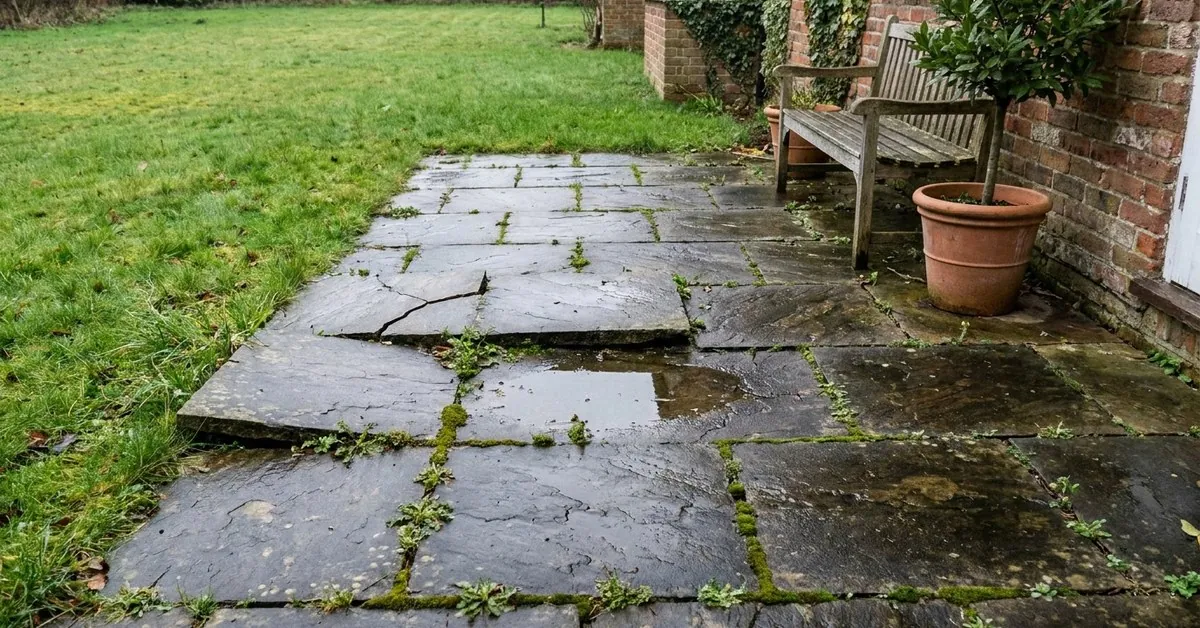
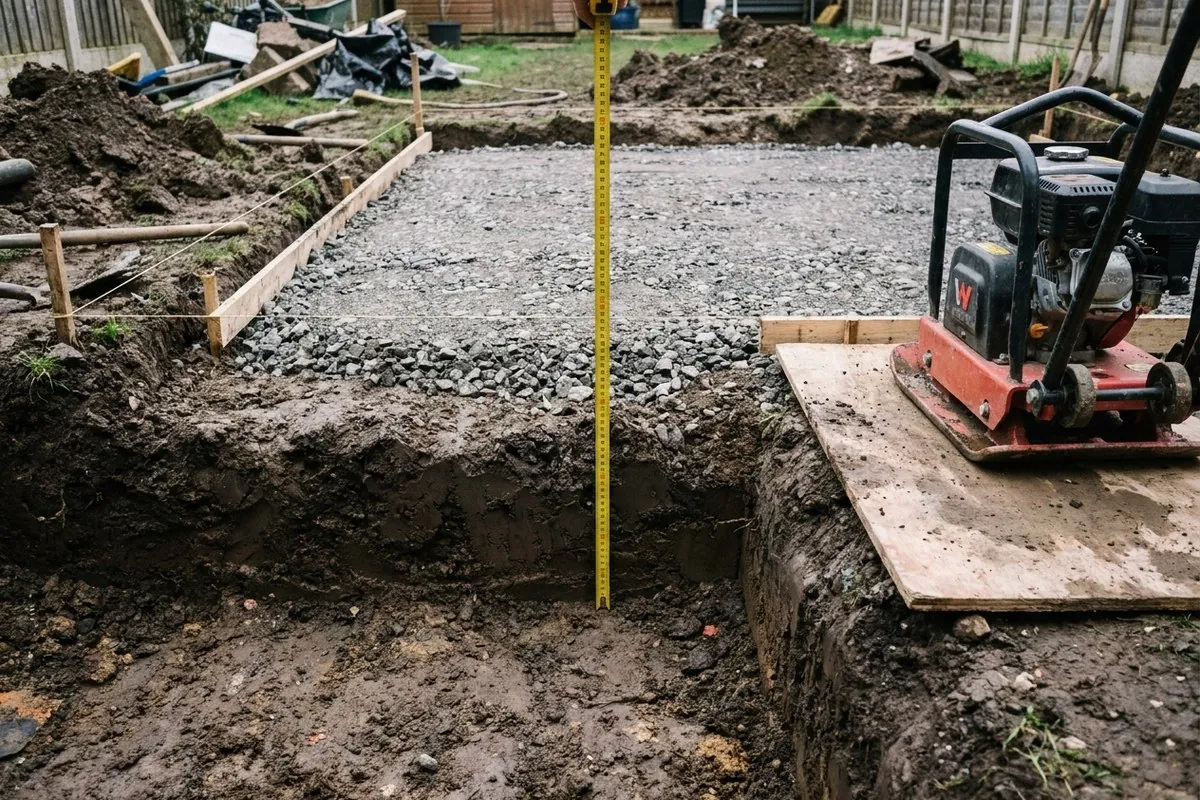
How deep is the sub-base, and how is the water handled? The sub-base is the layer of compacted crushed stone under a patio or drive. You never see it, but it decides whether the surface stays flat for decades or sinks and cracks in a few years. It's also the easiest place to cut corners, because nobody notices until it's too late. Then ask where the rain will go: which way the surface slopes, and what takes the water away from the house. We explain what goes wrong in why patio slabs sink.
Who will be my point of contact, and who will be on site? Ask who you'll deal with from the first visit to the finish, and who's responsible if something isn't right. Jobs go wrong when the person who measured up isn't the person running the job.
What happens if the weather turns? Ask who pays for rain days, and whether you'll get an agreed start and finish window before work begins.
What protects you afterwards?
What's guaranteed, in writing, and for how long? There are two kinds: a structural guarantee, which covers the base sinking or failing, and a workmanship guarantee on the finish. Ask how long each lasts, and whether the cover passes to the next owner if you sell. A promise on the phone isn't a guarantee.
Are you insured, and for how much? Public liability insurance protects you and your home if something goes wrong during the work. Ask for the figure and a copy of the certificate.
Who am I contracting with? Ask for the company name and number, then look it up on Companies House. It's free and takes a minute. Check that the name on the quote matches the name on the bank details.
What does a good answer sound like?
You don't need to know how a patio is built. Listen for detail, and for willingness to write it down.
| Question | A good answer | A worrying answer |
|---|---|---|
| Is the price fixed? | Yes, in writing, and here's what could change it | "It shouldn't go up much" |
| What's under the surface? | The depths and materials, layer by layer | "We do it properly" |
| What's guaranteed? | What's covered, for how long, on a certificate | "We stand by our work" |
| Can I see your insurance? | "I'll send the certificate today" | A change of subject |
| Where does the waste go? | Who takes it, and their waste carrier registration | "Don't worry about that" |
Digging out a patio or drive makes tonnes of soil and rubble. Check whoever takes it away is on the Environment Agency's public register of waste carriers. Under the government's waste duty of care code of practice, householders must take reasonable steps to hand their waste only to someone authorised to take it, and councils can fine you if it isn't.
How do you compare quotes that are far apart?
When two quotes are thousands apart, it's rarely the same job for less money. Far more often, the two firms are pricing different work, and one of them hasn't written down what they've left out.
Then put the quotes side by side and check:
- The same areas, in square metres, and the same lengths of edging, walls and steps.
- The same material, by supplier, product name and thickness, not just "porcelain" or "sandstone".
- The same depth of base, and the same plan for drainage.
- Which parts are firm prices, and which are allowances (a placeholder figure for something not priced yet).
- Whether removing the old surface and the waste is included.
The groundwork underneath usually takes more time and money than the material on top, so a better slab on a thinner base is still a worse patio.
What we'd do
Get every answer in writing. If someone gets defensive about a straight question, that tells you something too.
And ask us the same. Every one of our answers is in writing before you sign: the scope, stage by stage, the fixed price, and our guarantees, which are ten years on the sub-base and two years on workmanship, on a certificate that passes to the next owner if you sell. You deal with Chris from the first call to the final walk round, so there's one point of contact the whole way through. How a job runs with us is on our process page.
Questions people ask
How many landscaping quotes should I get?
Two or three is usually enough to compare, as long as each one is written and detailed enough to compare like for like. More quotes don't help if they're all just a number.
What's the difference between a quote and an estimate?
A quote is a fixed price for the work described. An estimate is a best guess, and it can go up. Citizens Advice explains the difference and what to check before work starts.
How do I check a landscaper is legitimate?
Look the company up on Companies House, ask for their insurance certificate, read their reviews, and ask to see jobs they've finished near you. Check the name on the quote matches the name on the bank details.
Why are two patio quotes so different?
Usually because they're pricing different work: a different area, a thinner base, a cheaper version of the same material, or things left out. Compare the written scope, not the total.