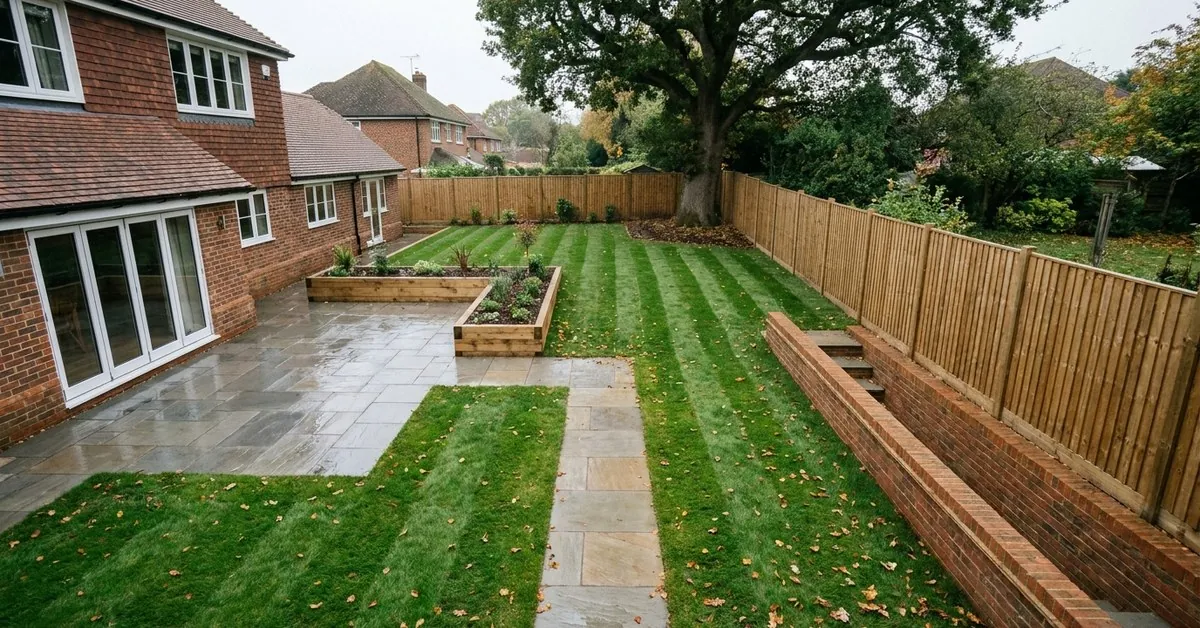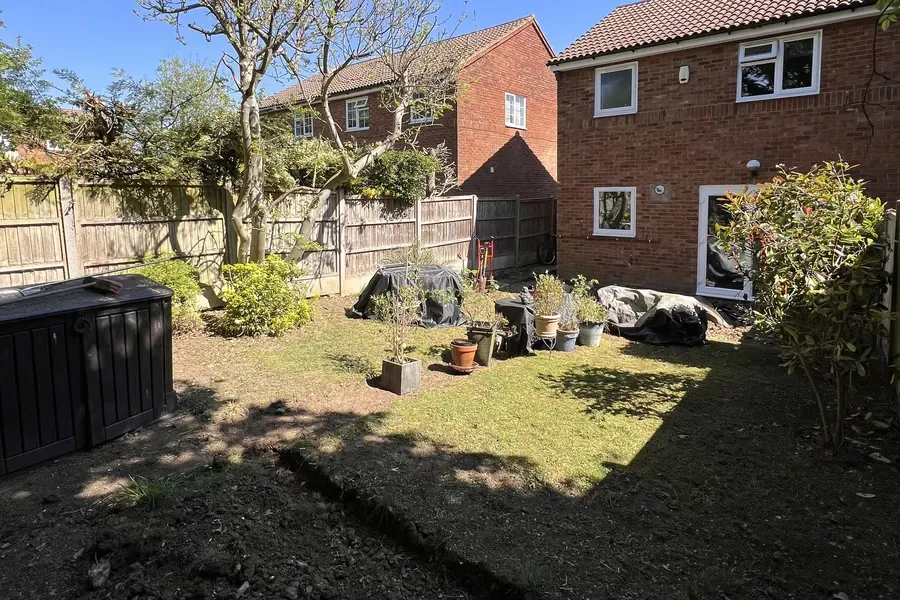
A garden after an extension usually needs more than a tidy-up. Expect buried rubble, soil squashed hard by machines and a dead lawn, and new doors that nothing outside lines up with. Clear it properly, design from the new doors outwards, and if you can, plan the garden before the builders leave.
The extension is the exciting part. The garden is what's left over. Once the builders have gone, a lot of people step out of their lovely new doors onto mud, broken brick and a lawn that's more track than grass.
That's normal. Some extension builders do good work outside, with a terrace where it fits. Often, though, the garden isn't in their job at all. Either way, it's worth knowing what you're dealing with before you lay a new lawn on top of it.
What state is the garden usually in after an extension?
The same few things come up again and again:
| What you'll find | What it means | What puts it right |
|---|---|---|
| Rubble under the soil | Brick, concrete and offcuts dug into the ground or spread under the topsoil | Dig it out where anything will be built. Grass struggles over it |
| Hard, flattened ground | Months of diggers, skips and boots squeeze the air out of the soil, so water sits on top | Break it up and dig in fresh topsoil before turfing or planting |
| A dead or rutted lawn | Covered by materials, driven over, or simply in the way | Re-turfing is usually quicker than nursing it back |
| New doors with nothing to meet them | The new floor level sets where the outside has to be, and the old patio rarely fits | A new patio set to the right height for the doors (below) |
| Moved drains and covers | New pipework and manhole covers in places the old garden plan didn't expect | Design around them, or fit recessed covers (shallow trays filled with paving) |
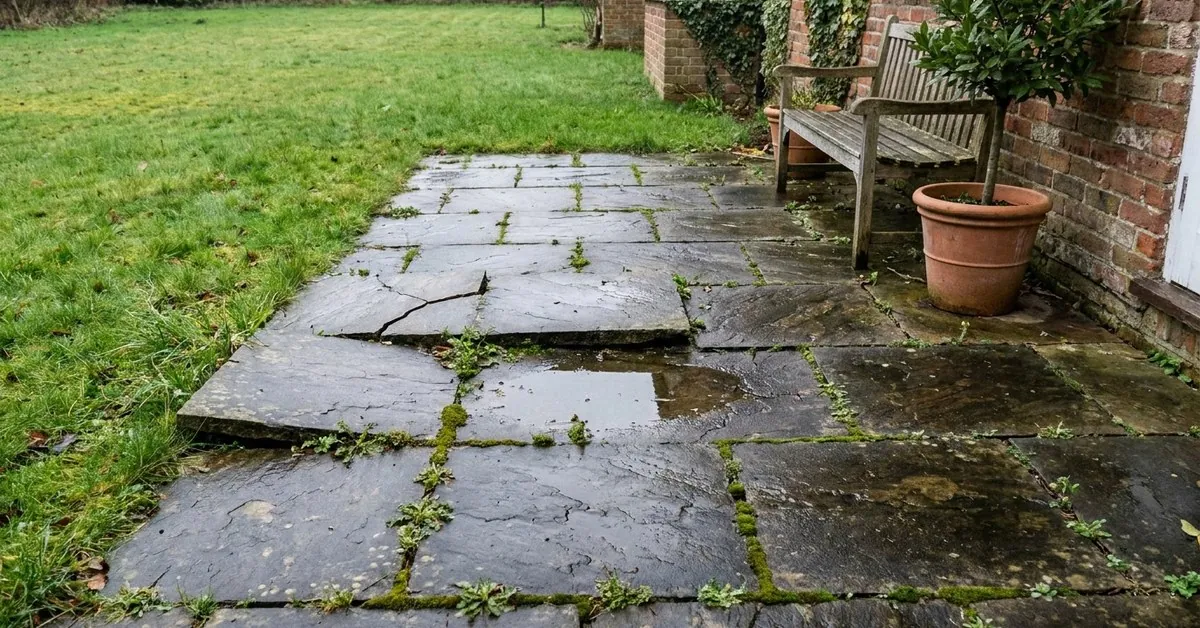
Plants can grow over a little rubble, but a patio laid on it can settle and sink. As we explain in why patio slabs sink, what's underneath decides how long the surface lasts.
It isn't only extensions that leave a garden like this. In Luton, another firm dug a garden out and walked off, leaving a steep drop right outside the back door. We made it safe first, then built a new patio, path and lawn in its place.
What should you check before anything new goes in?
A bit of homework now saves digging up new work later. Ask your builder before they leave:
- What's buried, and where. Rubble, old foundations, anything they filled a hole with.
- Where the new drains, pipes and manhole covers run.
- Whether any spare bricks are left over. Matching bricks are handy for steps or a low wall.
- Whether there's an outside tap or power point planned, and where the cable or pipe runs.
Then look at the extension wall. It has a damp-proof course, a waterproof layer a little above the ground. Paving needs to finish at least 150mm below it, about two rows of brick. Air bricks (the small vented bricks low in the wall) need to stay clear, too. Soil and rubble piled against a new wall can cover both.
How do you get a patio to meet the new doors?
This is the big one. Wide glass doors make you want the patio right outside them, at the same level, so the room carries on into the garden.
It can be done, but only with a drain to match. A patio flush with the doors needs a linear drain across the threshold: a narrow channel with a slotted grate that catches rain before it reaches the door. Without one, rain can run into your new room.
Everywhere else, the patio falls gently away from the house so rain runs off it, not back towards the wall.
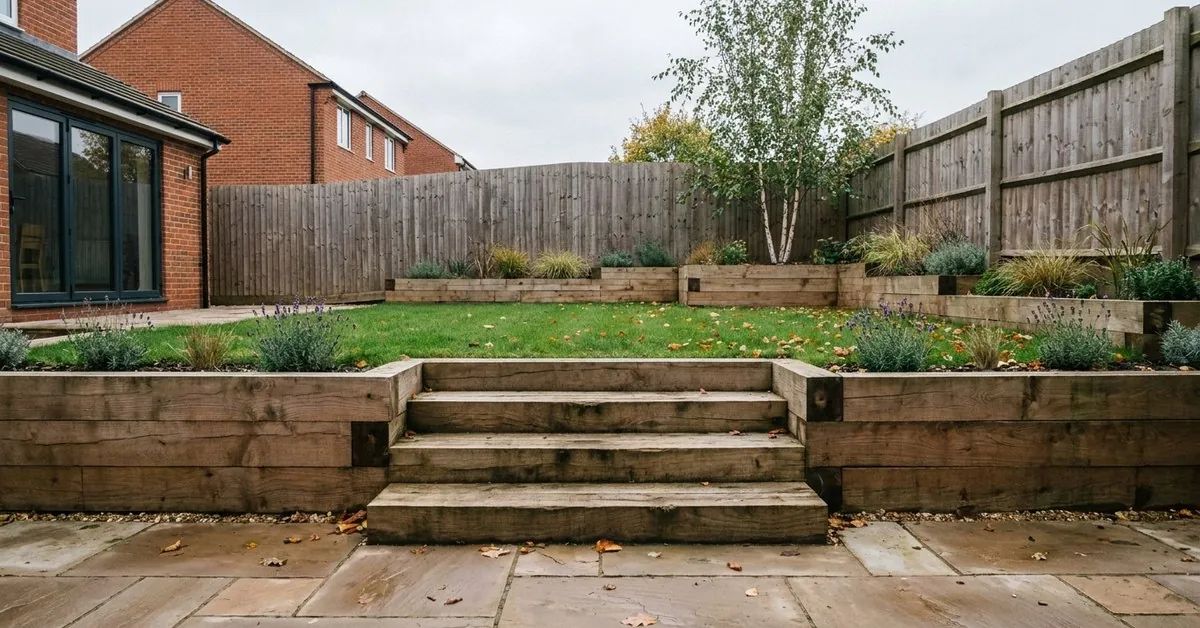
If the garden slopes away and the doors sit high above it, the terrace may need to be built up. Watch the height. The Planning Portal says a raised platform more than 30cm above the ground needs planning permission. Our post on sloping garden ideas covers terraces and steps.
When should you start on the garden?
Earlier than most people think: while the extension is still being built.
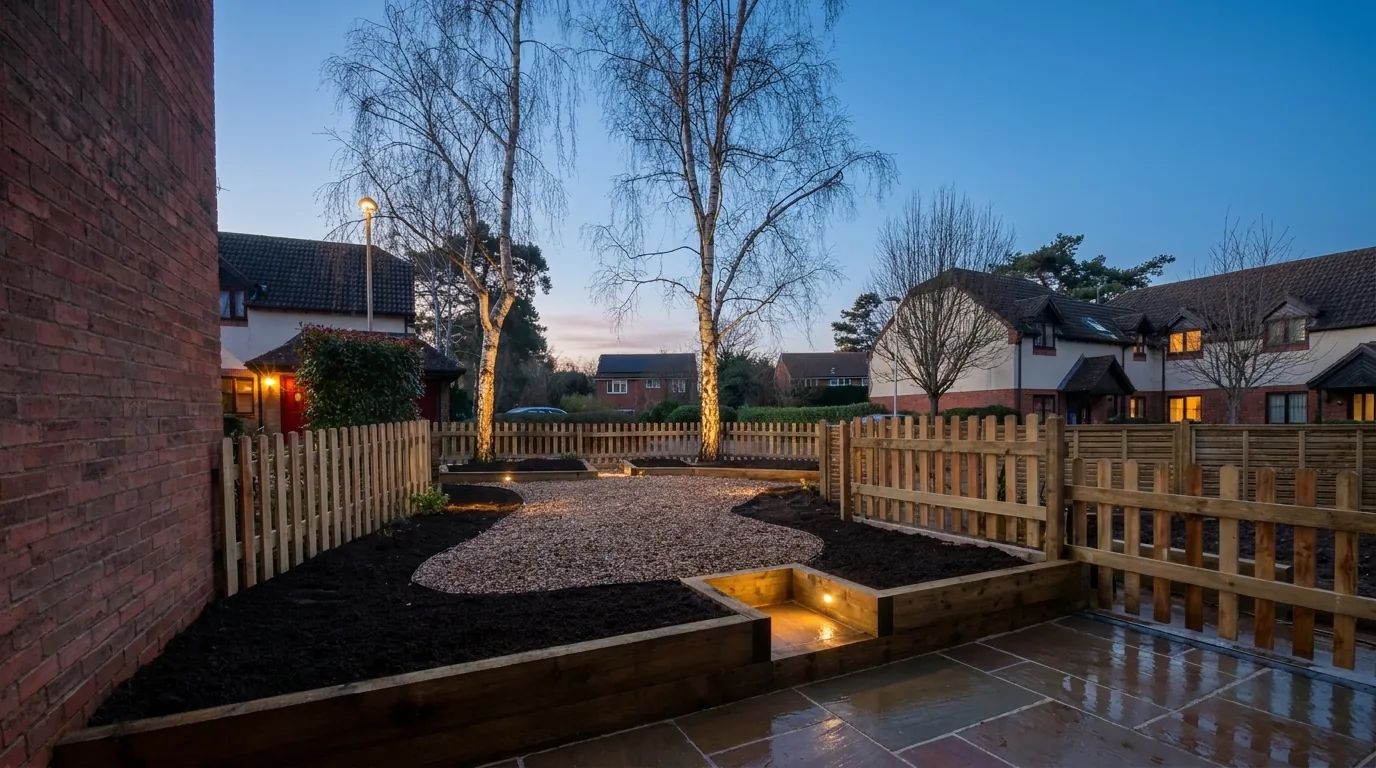
Partly that's levels and drains. Plan the patio height, drainage and any cables while the ground is still open, and nothing has to be dug up twice. If you'd like lights outside the new doors, here's what to plan in for garden lighting.
It's also about access. If your only way into the garden is through the house, every barrow of soil and bag of stone goes through it. Before the new floors and kitchen go in, that's easy. After, it means protecting new floors the whole way.
We had exactly that on one job: an extension with no side access, and the inside of the house still stripped back. So we suggested doing the garden before the extension was finished, so nothing had to be carried through a new house. It won't suit every build, but when it does, it saves a lot of hassle.
What we'd do
Start at the new doors. That's the view you'll see every day, so we'd design the garden from there outwards: where you sit, where the sun falls, and how the patio meets the room.
Then we'd dig out the rubble wherever anything will be built, and break up the flattened ground before any turf goes down. A new lawn on top of rubble only looks fine at first.
And we'd plan the whole garden in one go, even if you build it in stages. After the cost of an extension, a lot of people want to do the patio now and the rest next year. That's fine, as long as the first stage is built with the second in mind. Our guide to what a full garden renovation involves walks through it.
If your garden is a building site right now, see how we design and build gardens.
Questions people ask
Is it OK to leave builders' rubble buried in the garden?
Under a flower bed with plenty of soil on top, a little is usually fine. Under a lawn it makes patchy grass, and under a patio or path it can settle and make the paving sink. Where anything will be built, we dig it out.
Should my builder put the garden back?
Only if it's in their agreement. Many extension contracts leave the garden out, or only cover a terrace by the new doors. Check what yours says before the work starts, so you know what you'll be left with.
Can a patio be level with bifold doors?
Yes, with a linear drain right across the threshold to catch the rain. Without one, water can run straight under the doors. The rest of the patio still needs a gentle fall away from the house.
How soon after the extension can the garden be done?
As soon as the outside work is finished and the scaffolding is down. If access is through the house, it can be easier to do it before the inside is finished. Plan it while the build is still going.