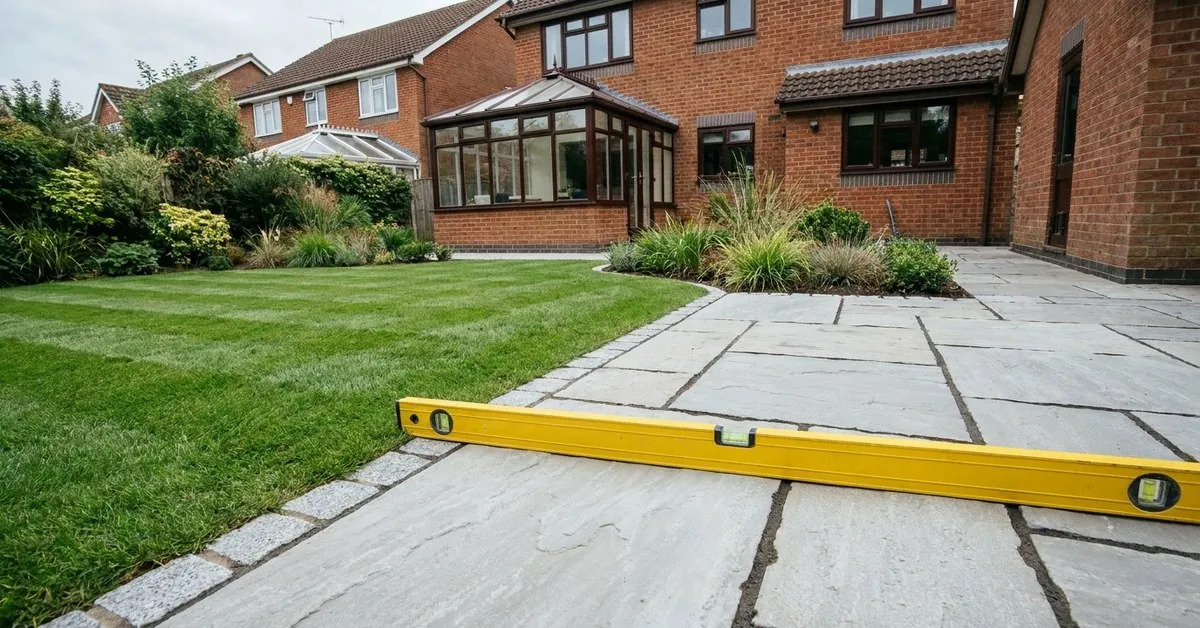
A landscaping guarantee should cover two things: the work you can see, like the slabs, joints and levels, and the base underneath that holds it all up. It should be in writing, give the years for each part, list what it doesn't cover, and pass to the next owner if you sell.
"What does your guarantee actually cover?" is a fair question to ask anyone who quotes. "Fully guaranteed" on a quote tells you very little on its own.
What should a landscaping guarantee cover?
Two parts, because a patio or drive can fail in two different ways.
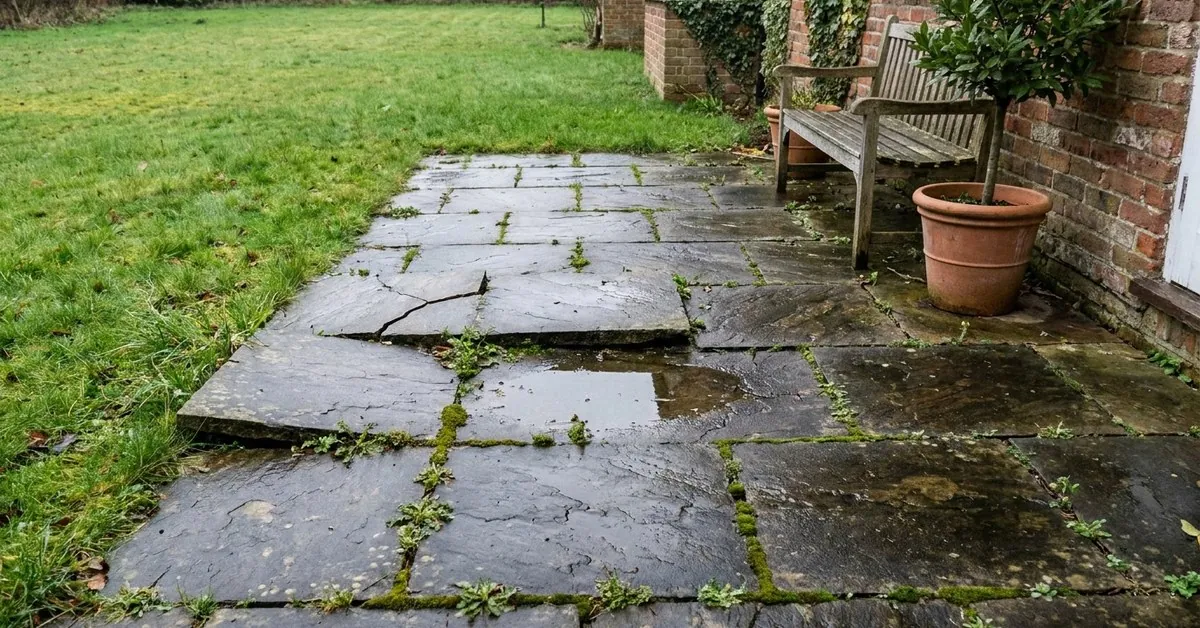
The surface and the workmanship. Everything you can see: the slabs or blocks, the joints between them, the levels, and the falls (the gentle slope that carries rain away from the house). If joints crack out, a slab rocks, or water pools because the slope was set wrong, that's down to how it was built. The guarantee should cover putting it right.
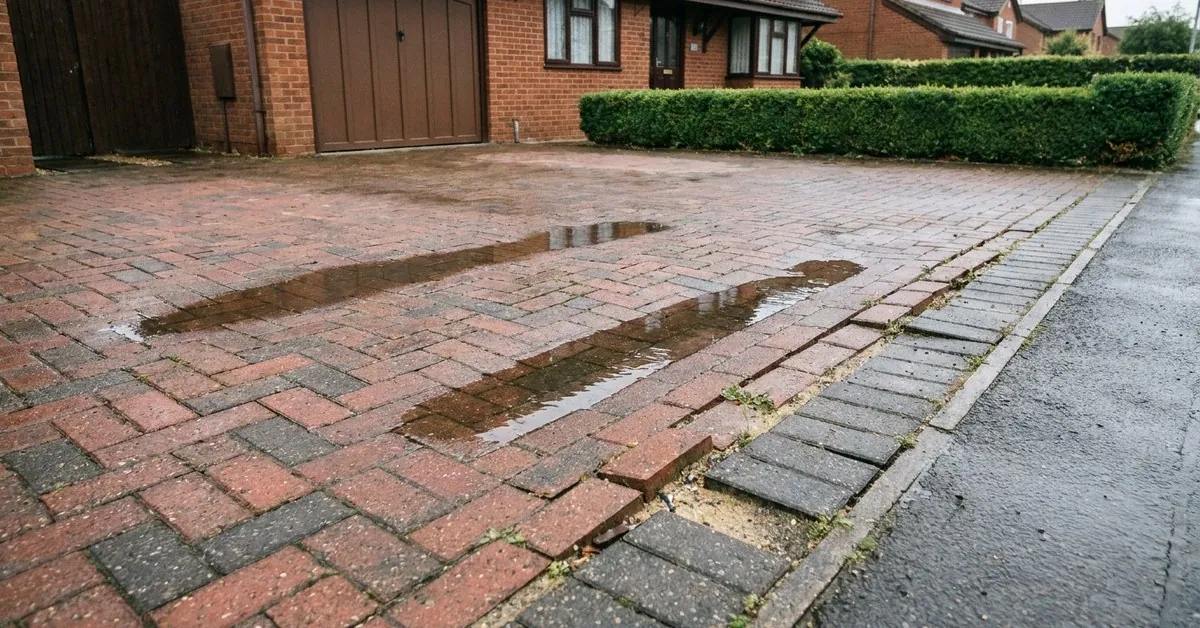
The base underneath. The sub-base is the layer of compacted crushed stone under the surface. You never see it, but it decides whether the surface stays flat. When a patio sinks, it's usually the base that has failed, not the slab. Here's why patio slabs sink.
Ours cover both: two years on workmanship, and ten years on the sub-base under your paving. If something we installed fails within the two years, we come back and fix it at no charge. If the base sinks, spreads or breaks up within the ten because of the way we built it, we put it right, including relaying the surface on top.
A guarantee sits on top of your legal rights, not in place of them. Under the Consumer Rights Act 2015, anyone you pay must do the work with reasonable care and skill, and a contract can't take that away. A good guarantee goes further, because it names the parts, the years, and what happens if one fails.
How long should a landscaping guarantee last?
Long enough to catch the fault it's there for. Workmanship faults tend to show early, often after the first heavy rain.
A poor base can take longer to show, because it sinks slowly under the weight on it. That's why the base should carry the longer cover.
Be wary of one big number with no detail. A "10-year guarantee" on what: the surface, the base, or the materials? Paving makers sometimes guarantee the slab or block itself, but that covers the product, not how it was laid.
What isn't covered, and is that fair?
Every honest guarantee has exclusions. What matters is that they're written down, and that each one is something the builder doesn't control.
| What happens | Covered by a good guarantee? | Why |
|---|---|---|
| Slabs sink because the base was too thin or badly compacted | Yes | That's how it was built |
| Joints crack out, or water pools where the slope was set wrong | Yes | That's workmanship |
| A van or lorry parks on a patio built for walking on | No | It's carrying more than it was built for |
| Someone digs a cable or pipe trench right beside it | No | Their work has disturbed the base |
| Moss in the joints, or natural stone mellowing in colour | No | Normal weathering and cleaning |
| New plants die after a dry month with no watering | No | Care after planting is yours |
| The drive dips near a big tree after a dry summer | No | The ground itself has moved |
If you'll park something heavy on it, say so when you get quotes, so it's built for that.
Our ten years carries two conditions, and only two. Don't load it beyond what it was built for, and nobody else digs or builds within 1 metre of the base. Planning a cable trench or a new wall nearby? Ask us first. What's covered and what isn't, in full, is on our guarantees page.
What if the ground itself moves?
This is the exclusion people know least about. Nobody has ever asked us what happens if a drive dips because the clay underneath dried out and shrank. Most people don't know it's a thing.
It is. Clay soil swells when it's wet and shrinks as it dries. In a long dry summer, or near a big tree whose roots draw water out of the soil, it can shrink enough for anything on top to drop. The British Geological Survey calls shrinking and swelling clay one of the most damaging ground hazards in Britain. A leaking drain washing soil away can do the same.
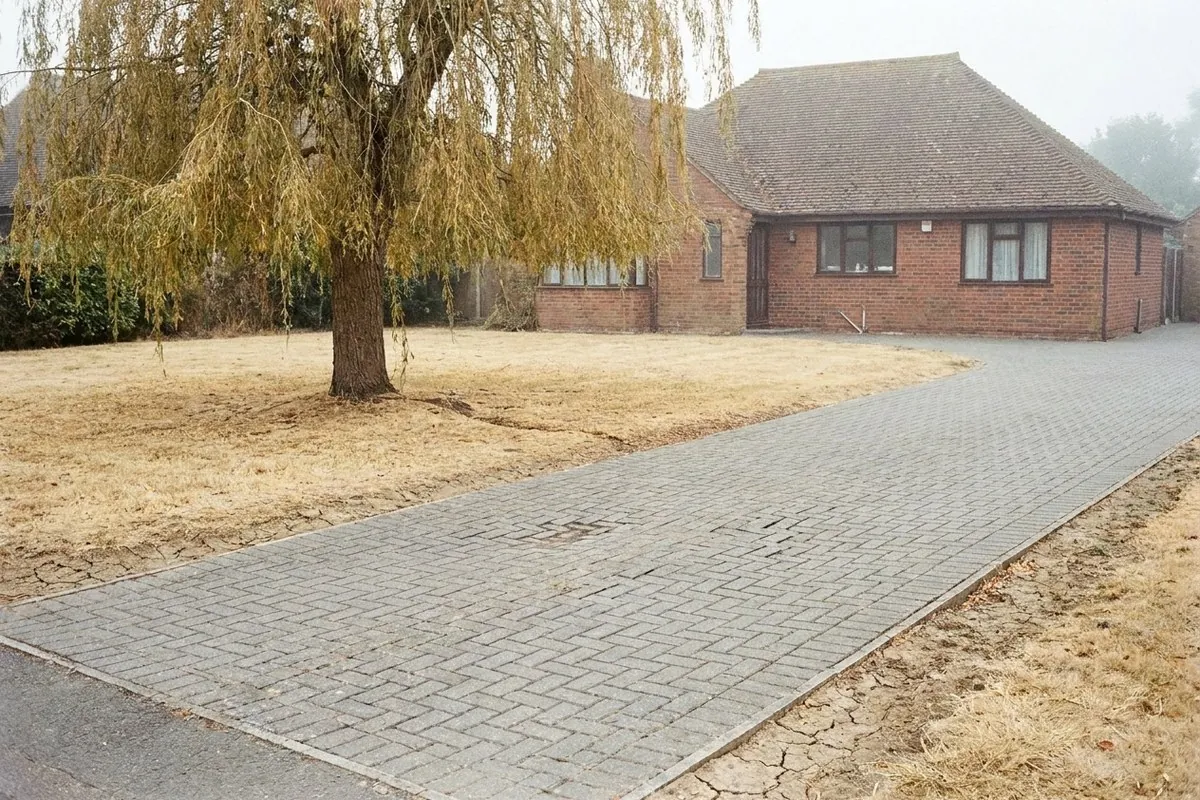
So a fair guarantee draws a line between two things:
- Settlement is the layers that were built giving way: a base too shallow, badly compacted, or laid on soft ground. That's the builder's, and it's exactly what a structural guarantee is for.
- Subsidence and heave are the ground itself moving: sinking as it dries, or lifting as it wets up again. No base of this kind stops that, however deep it goes or whatever it costs.
Ours draws the line in the same place. Settlement is ours. If the ground itself moves, that's normally a matter for your buildings insurance, and we'll give you our photos and notes to support a claim.
Settlement is the one you see most. One Harpenden patio we repaired had been laid by another firm only a year before, and it was already sinking. When we lifted the slabs, there was 20mm of crushed stone at most, and parts sat on bare mud. No dry summer did that.
How do you make a claim?
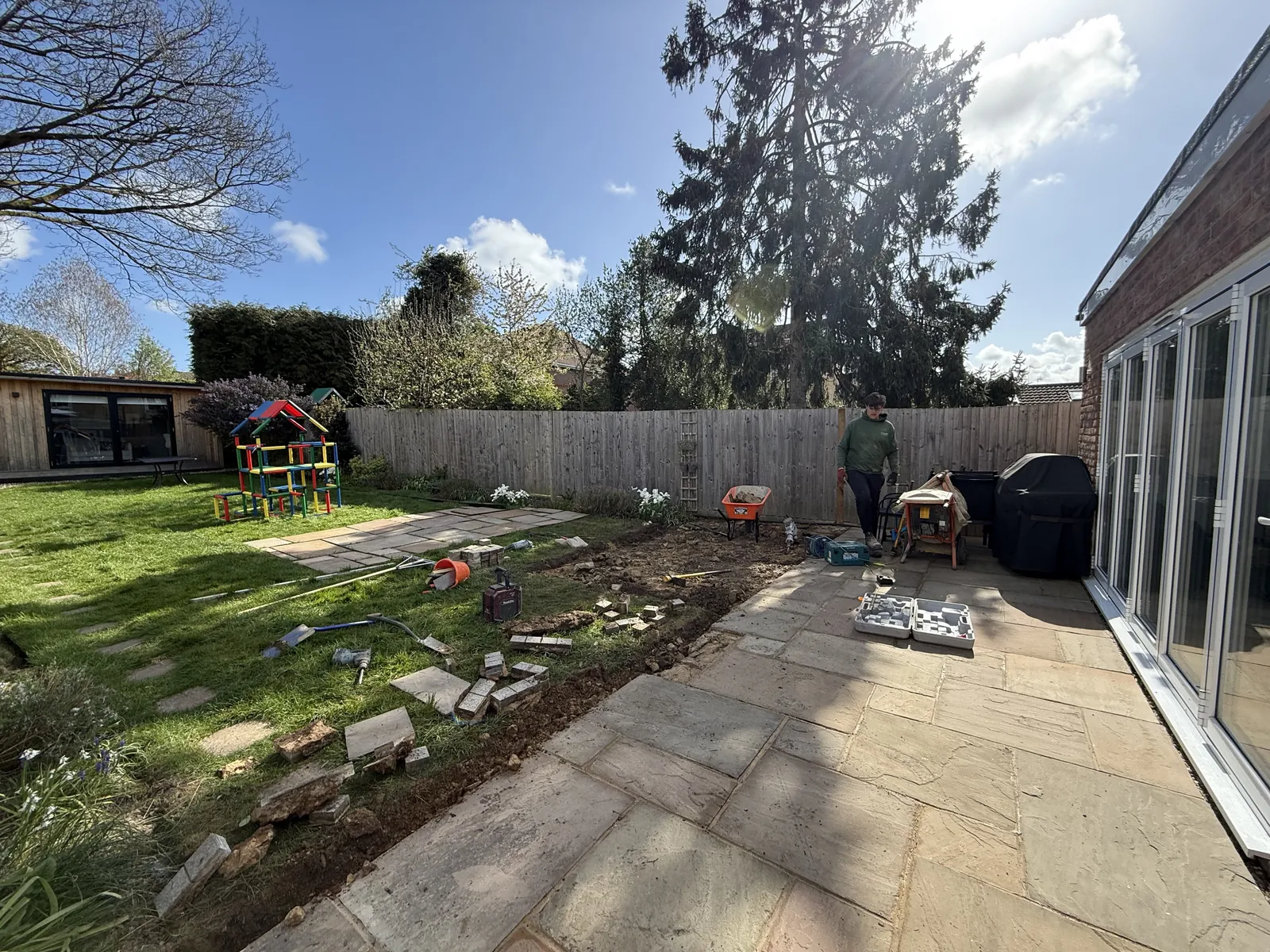
With any firm, report a fault as soon as you notice it, in writing, with dated photos. Don't let anyone else lift it first, or nobody can see what failed. Keep the certificate with the house paperwork.
With us, it's three steps:
- Tell usCall or email with a photo and the reference on your certificate.
- We come and lookWe tell you honestly whether it's covered.
- We put it rightIf it's covered, we agree a date with you and fix it.
What we'd do
Watch for patch repairs. A guarantee can only cover what was built, so if you're offered a patch, ask whether it covers the patch or the whole drive. More on that in sunken and uneven driveways.
Ask to see the guarantee before you sign, not after, and read the exclusions first. A guarantee is only worth what's left once they're taken out.
- Which part does each number cover: the surface, the base, or the materials?
- If the base fails, do you relay the surface on top, or just the base?
- What's excluded, and what conditions do I have to keep to?
- Is it on a certificate that lists what you built at my house?
- Does it pass to the next owner if I sell?
- Is it given by a registered company, or by one person?
Then ask us the same. Our guarantees are given by the company, on a certificate that lists everything we built at yours and the date each cover runs to, and it goes with the house if you sell. How a job runs with us, from the first call to that certificate, is on our process page.
Questions people ask
Does a landscaping guarantee cover subsidence?
Usually not, and that's fair. Subsidence is the ground itself moving, for example clay shrinking in a dry summer or tree roots drying the soil. No base prevents that. It's normally a matter for your buildings insurance. What a structural guarantee should cover is settlement: the base the builder laid giving way.
Does the guarantee pass to the new owner if I sell?
It depends on the firm, so ask before you sign. Ours does: it passes to the new owner for the rest of its dates, with nothing to register. Hand the certificate on with the house paperwork.
What's the difference between a guarantee and a manufacturer's warranty?
A manufacturer's warranty covers the product, like the slab or block. The installer's guarantee covers how it was laid and what it was laid on. When a patio or drive goes wrong, in our experience it's the laying or the base far more often than the slab, so the installer's guarantee is the one to read closely.
Can I get a guarantee on a patch repair?
On the patch itself, possibly. On the rest of the surface, nobody honestly can. If the old base is missing everywhere, a patch can be relaid properly while the area next to it carries on sinking. Ask exactly what a repair guarantee covers before you agree to it.