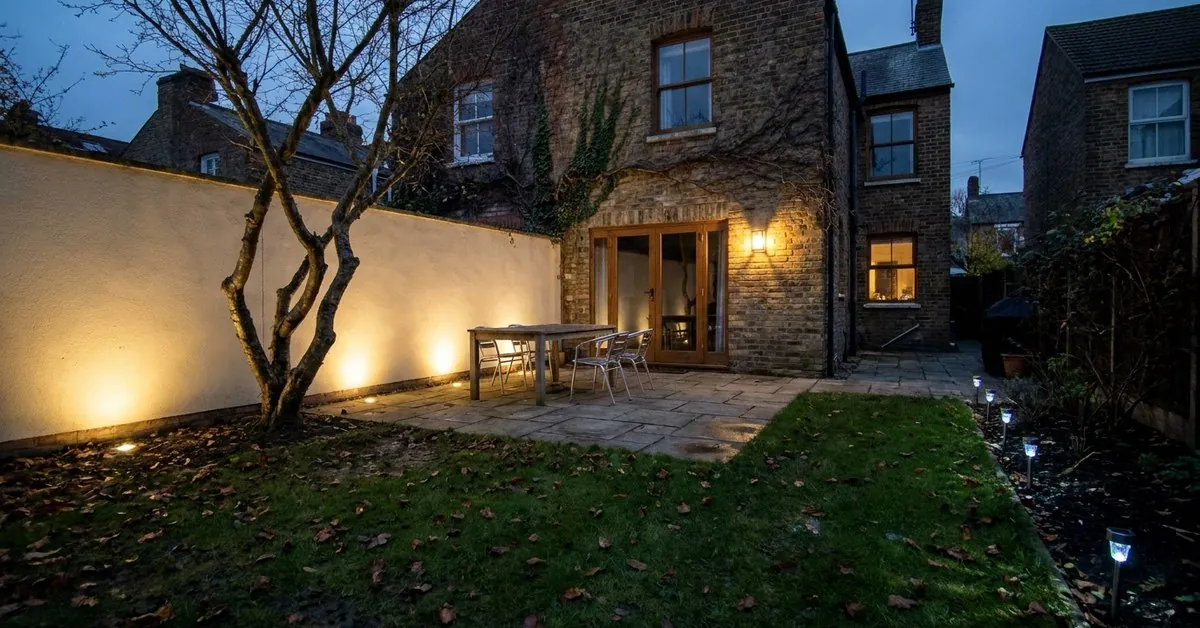
Choosing between solar and mains (wired) garden lights comes down to what you want the light to do. Solar lights are easy and cost nothing to run, but they're dim and weakest in winter, when it's dark by teatime. Wired lights need an electrician and planning, but they come on every night and can light a tree, a wall or a whole patio. Use solar for small markers, and wired for anything you'll rely on.
It's November, it's dark before you've finished work, and the garden disappears for half the year. So you're wondering about lights. So you're wondering whether solar will do.
Solar or wired garden lights: what's the real difference?
| Solar | Wired | |
|---|---|---|
| Putting them in | Push a stake into the ground | Cable in a duct underground, fitted by an electrician |
| How bright | Soft glow, enough to mark a path | Enough to light a tree, a wall or a whole patio |
| In winter | Weakest when the days are shortest | The same every night |
| Control | Usually come on by themselves at dusk | A switch inside, a timer or a sensor |
| Where they go | Only where the panel gets daylight | Anywhere a cable can reach |
| Running | Nothing to pay to run, but batteries and fittings wear | A small electricity cost |
| Moving them later | Easy | Hard once the paving is down |
Do solar garden lights work in winter?
They work, but not well. A solar light charges from daylight, and a UK winter gives it short, grey days to do that. So you get less light for fewer hours, just when you'd use the garden lights most.
Shade makes it worse. A panel under a tree, by a fence or on the north side of the house may hardly charge at all in midwinter. The RHS advises putting solar lights where they can charge in daylight, which rules out a lot of the places you'd actually want light.
They also take a battering. When Which? left 13 solar garden lights in its test garden, 3 didn't survive a winter outside. Treat cheap solar lights as something you'll replace, not something you fit once.
When are solar lights the right choice?
For small jobs, often.
- Marking a path or an edge, where a soft glow is all you need.
- A rented house, or a garden you'll redo later, where there's no point running cable.
- Trying out positions. Push a few in and live with them for a while. It's a cheap way to work out what you'd want wired.
- The far end of a big garden, where a cable is a long run for one small light.
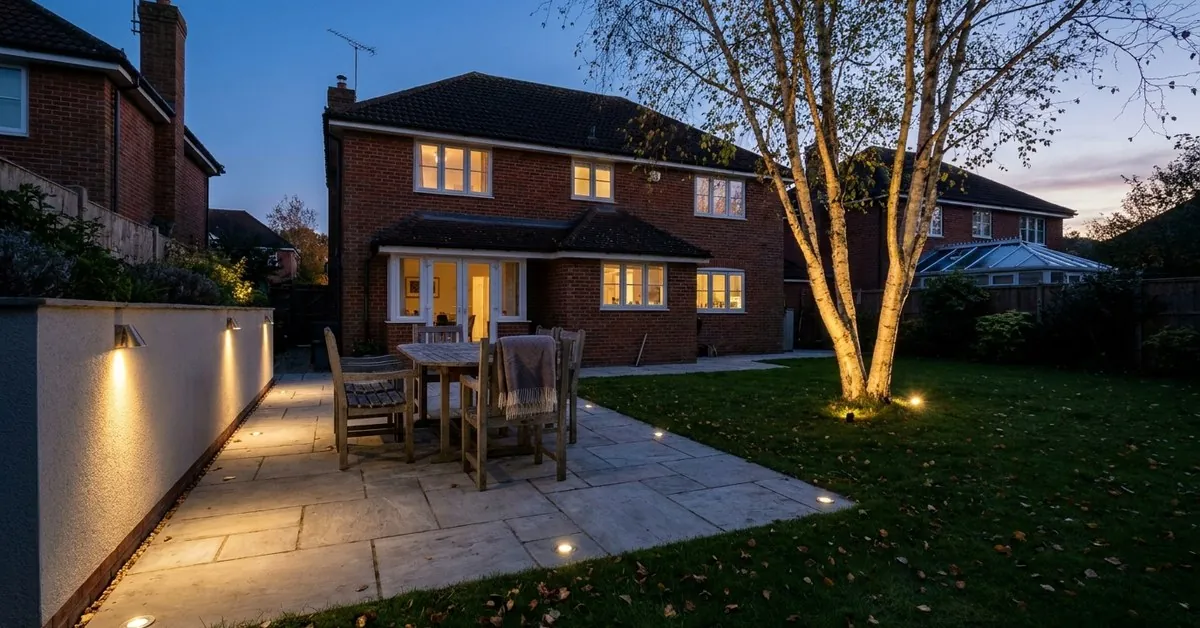
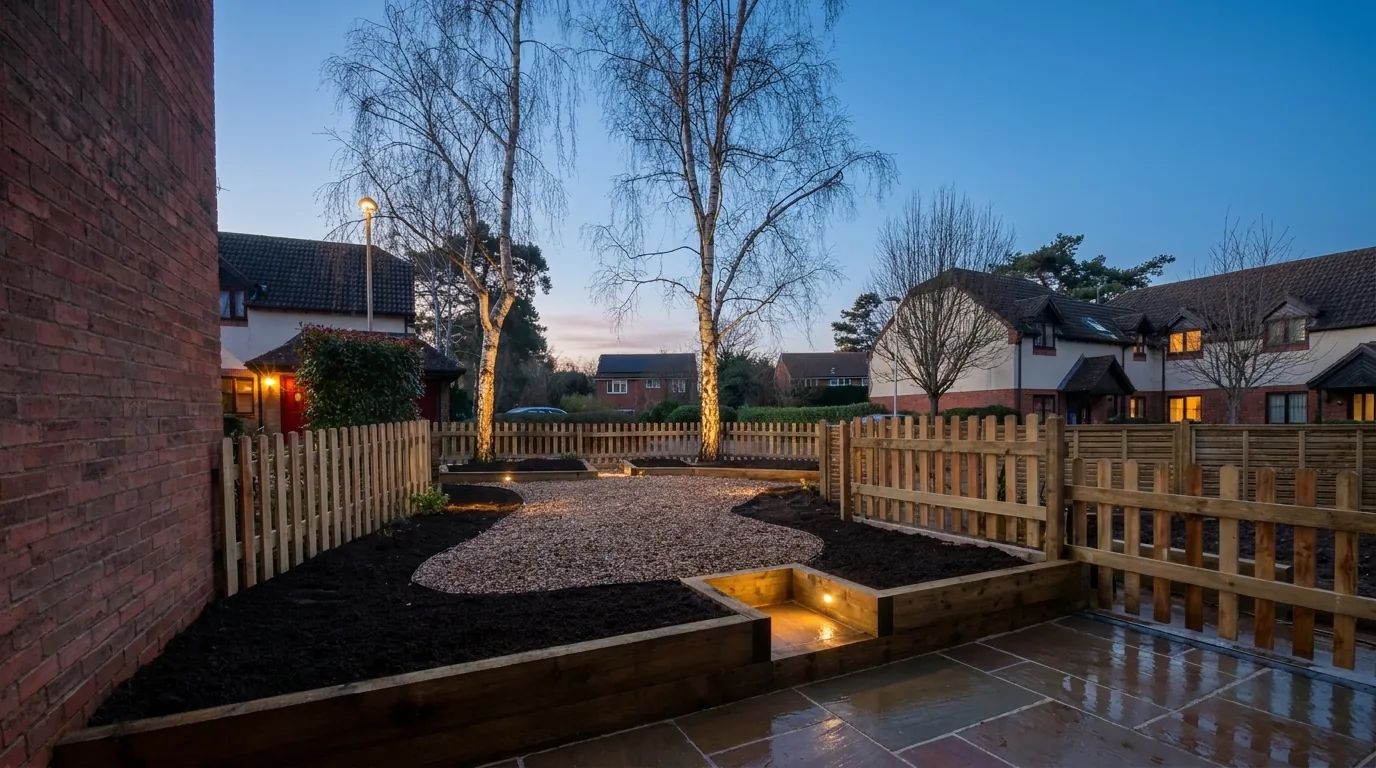
What solar won't do well is the light that makes a garden feel like a room at night. Uplighting a tree, washing a wall with light, or lighting a dining table on the patio needs more power than a small panel can store. We don't fit solar lights. The lighting we plan in is wired.
What does it take to put in wired garden lights?
Planning, mainly, and an electrician. Spotlights and the brighter feature lights usually need mains power. Exactly how they're wired is your electrician's call.
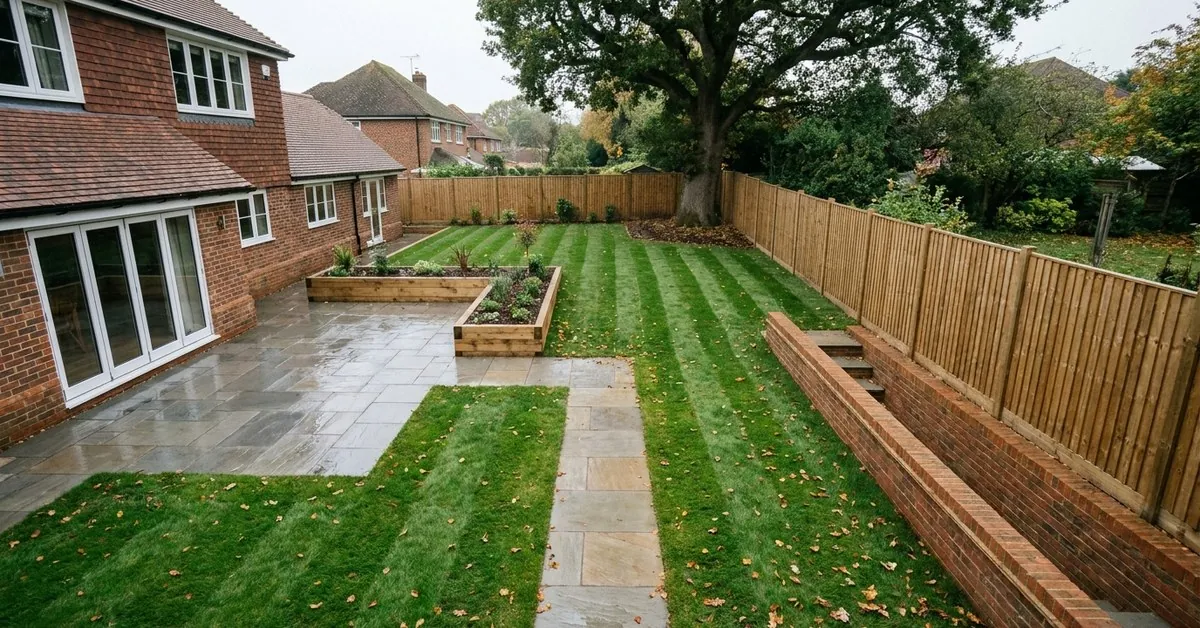
Our part is the groundwork. While the garden is dug up, we lay ducts, plastic pipes in the ground, along the routes the cable will take. Then the walls, steps and paving go over the top, and the electrician pulls the cable through and connects the lights later. There's more on who does what, and the Building Regulations side, in garden lighting: what to plan in before the build.
Can you add wired lights to a garden that's already finished?
Yes, but it's more work. To get a cable under an existing patio, you have to lift a few slabs and relay them. Or the cable runs across the top, where it's on show and can get damaged.
Wall and fence lights are easier, because the cable can often follow the boundary. So if your garden is already done, start from the edges.
What we'd do
Mix them, but get the order right.
Plan the wired lights first, for the things you'll use every evening: the patio, the steps, the path from the back door, and one or two features you'd look at from inside, like a tree or a wall. If you're having work done, the ducts go in during the build. Then fill the gaps with solar where a soft glow is enough.
For a cosy garden, keep the light low and warm in colour, and point it down. A few well-placed lights do more than a lot of bright ones. Here's how we design and build whole gardens.
Questions people ask
Are solar garden lights bright enough?
For marking a path or an edge, yes. For lighting a patio you sit out on, a tree or a wall, no. Their small panels and batteries can't store enough power, especially on short winter days.
Do I need an electrician for wired garden lights?
Yes, for anything wired into the house supply. Garden lighting comes under Part P of the Building Regulations in England, and a new circuit has to be notified to building control or signed off by a registered electrician. Solar lights need no electrician.
Is low-voltage garden lighting better than mains?
Neither is better everywhere. Low voltage can suit smaller fittings, and brighter spotlights often need mains. It depends on the lights you choose and how far the cable runs, so it's one for your electrician to specify.
Should I put cable ducts in even if I don't want lights yet?
If the garden is being dug up anyway, yes. A duct adds very little to the job while the ground is open. Later, it saves lifting the patio to get a cable underneath.