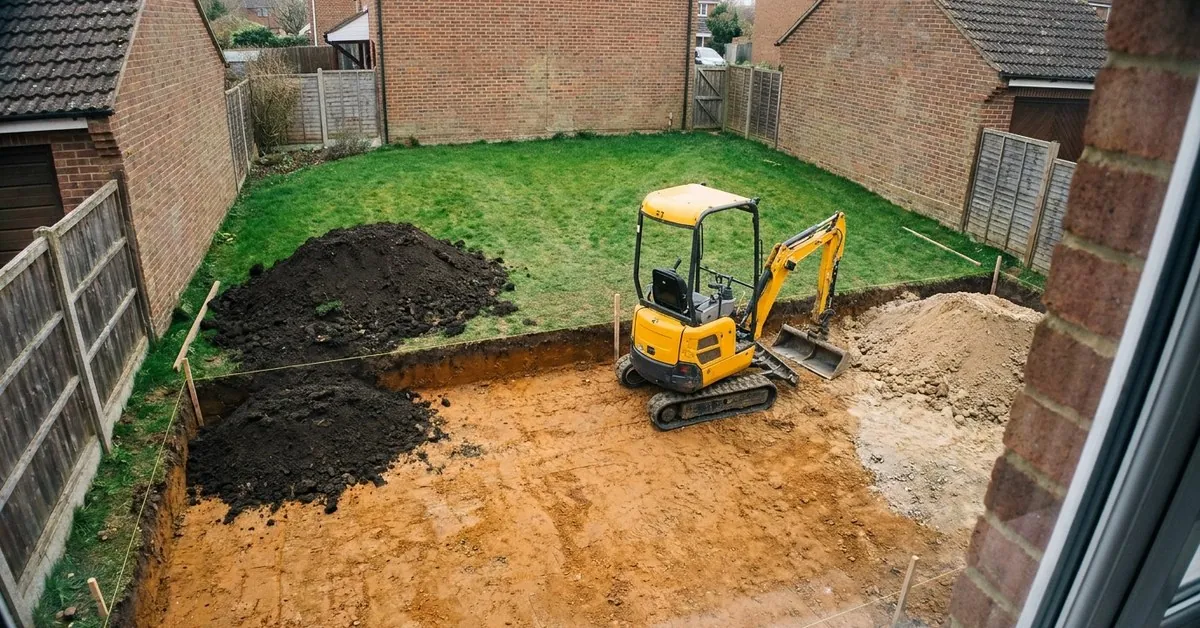
Levelling a garden means digging soil off the high side, building up the low side where it's needed, and holding the difference with a retaining wall. On a gentle slope it can be little more than reshaping the lawn. On a steeper one, the walls, the drainage and getting the soil out are most of the job.
You can't put a table down without it rocking, the kids' ball always ends up at the bottom, and half the garden goes unused. So you want it level. What most people picture is a digger for a few days. What they don't picture is everything that holds the new levels in place.
What does levelling a garden actually involve?
The stages are the same on almost every garden.
- Measure the levelsHow far the ground falls, which way, and where the damp-proof course, the waterproof layer low in the house wall, sits.
- Decide the layoutOne flat level or two or three tiers, and what goes on each: patio, lawn, beds.
- Plan the accessHow a digger gets in, where the soil goes out, and where the materials can be dropped.
- Strip the topsoilThe dark, good soil on top comes off first and is kept to one side.
- Cut and fillThe high side is dug down. Where the low side needs building up, the fill goes in thin layers, each one compacted.
- Build the walls and drainageRetaining walls go in wherever two levels meet, with a way for water to get out from behind them.
- Finish the surfacesTopsoil back on for lawn and beds, or a proper base for paving.
The dig is the messy part. Once the walls and base are in, it gets much tidier.
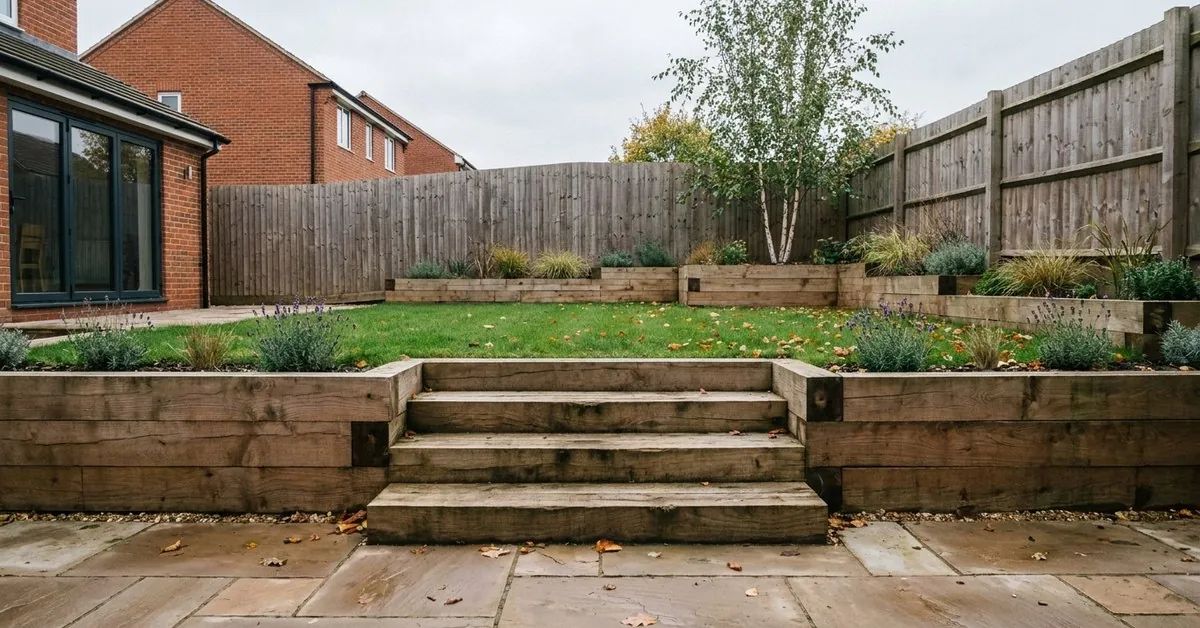
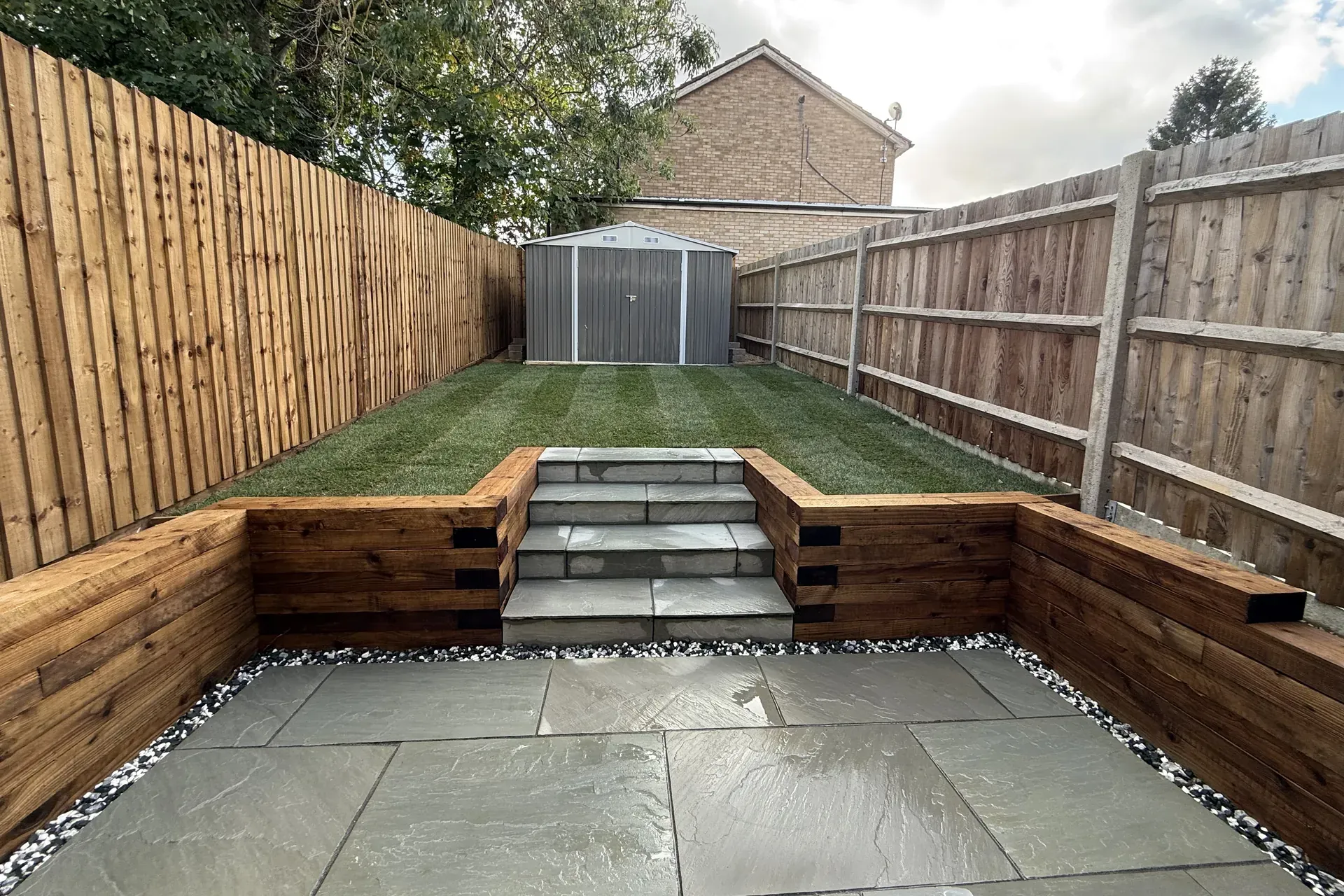
A slope made into two level tiers
Can you just move the soil from the high end to the low end?
Sometimes. Where it balances, soil dug from one end builds up the other. That's called cut and fill, and it saves taking soil away and bringing new soil in.
But often it doesn't. Level the whole garden and the soil usually has somewhere to go. Cut a patio into the bottom of a slope and nothing needs raising, so that soil has to leave the garden.
Two things matter with whatever stays:
- Topsoil and subsoil are kept apart. Topsoil is the dark top layer that grass and plants grow in. Subsoil is the paler, heavier ground underneath, and very little grows well in it. Mix them up and you get a level lawn that never thrives.
- Fill is built up in thin layers, each one compacted. Soil tipped in a heap keeps settling long after the job is done, and whatever sits on it sinks with it. Under a patio, we'd always rather build on firm, undisturbed ground than on new fill. There's more on that in why patio slabs sink.
Does a sloping garden need retaining walls?
Almost always, wherever two levels meet. This is the part people don't expect: the big job isn't the digging, it's holding the ground back afterwards, so the garden stays in level tiers.
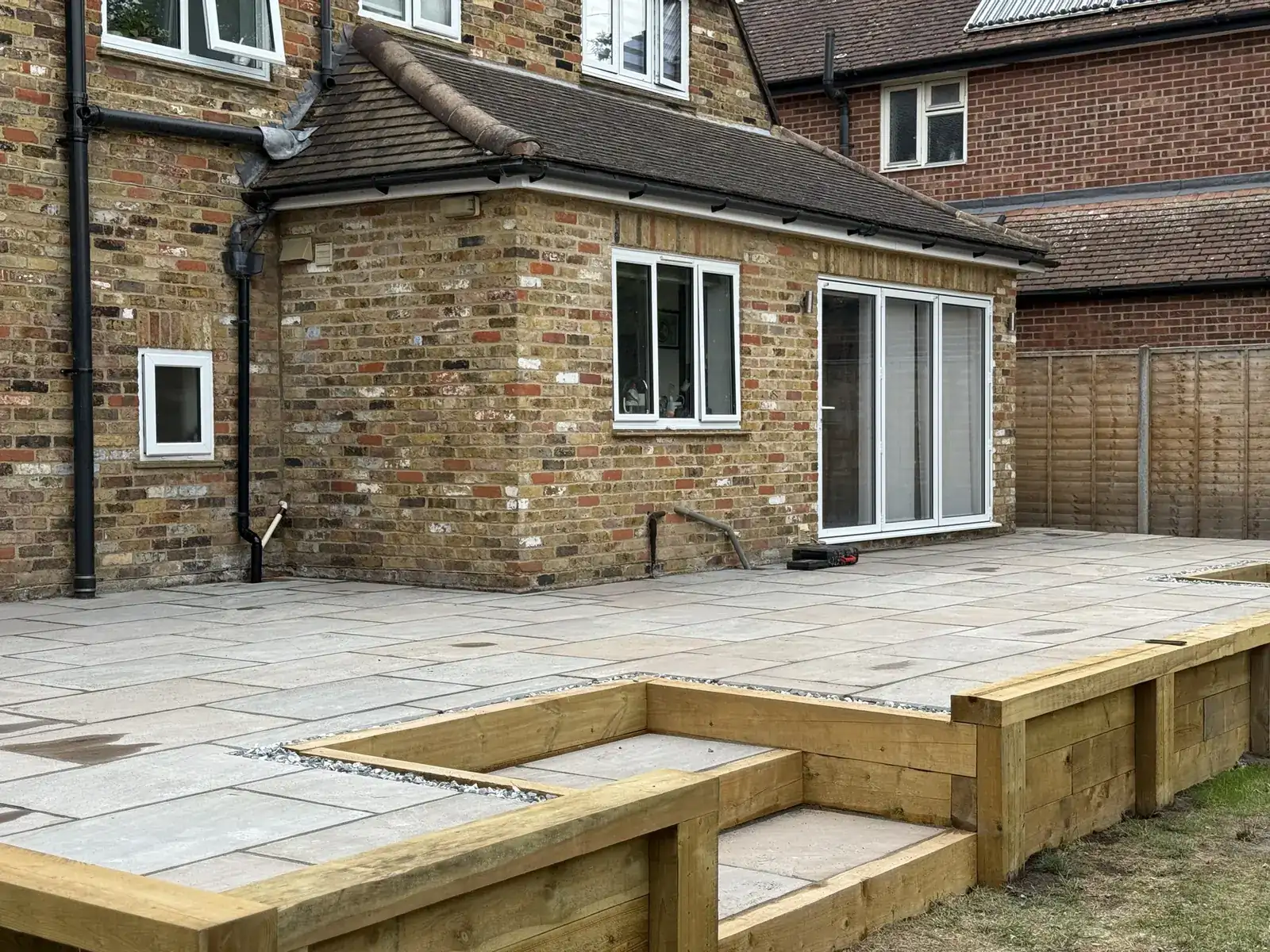
A retaining wall can be a low edge of sleepers, timber beams laid on their side, 20 or 30cm high. On a steeper garden, it's a proper built wall with foundations and drainage behind it. Either way, it has to hold back wet soil for years, so it's built to a different standard from a garden wall that only stands up on its own. Here's how to tell when you need one.

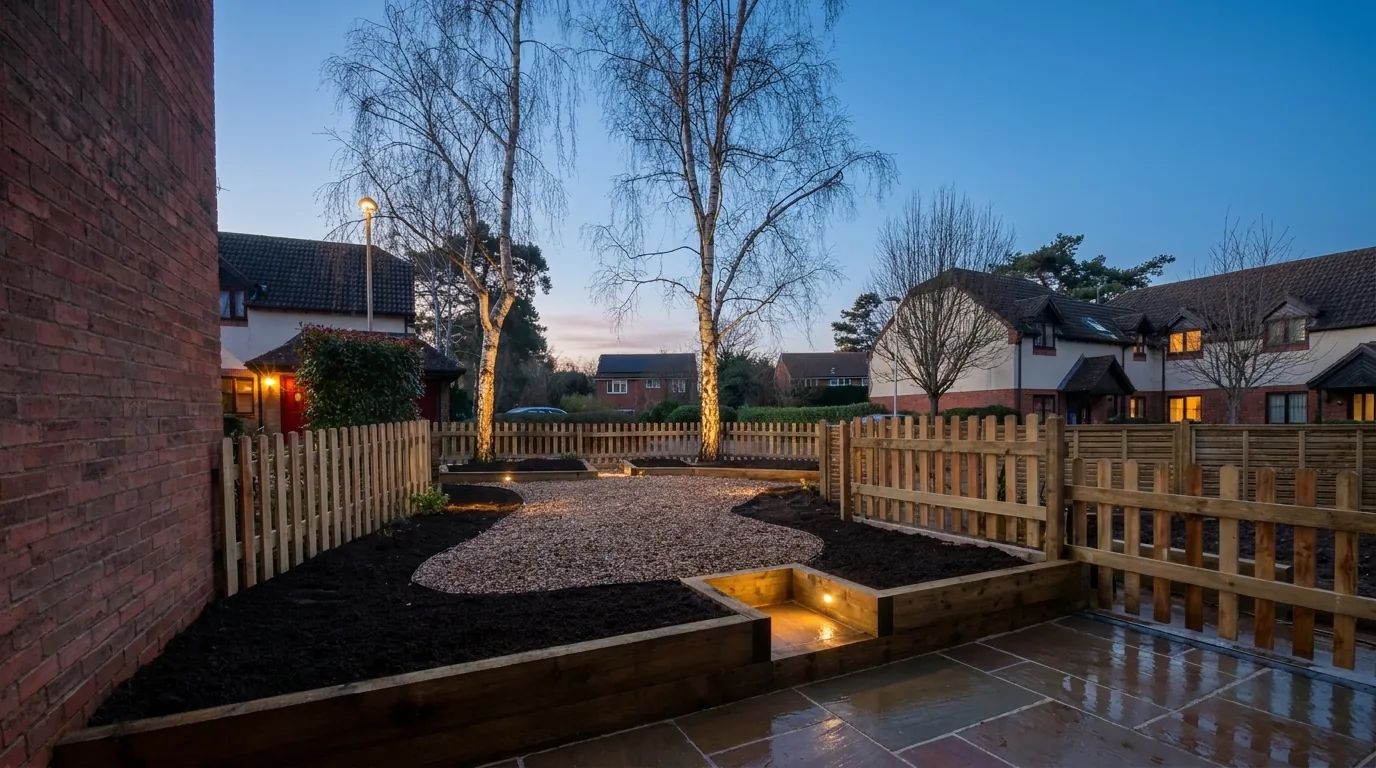
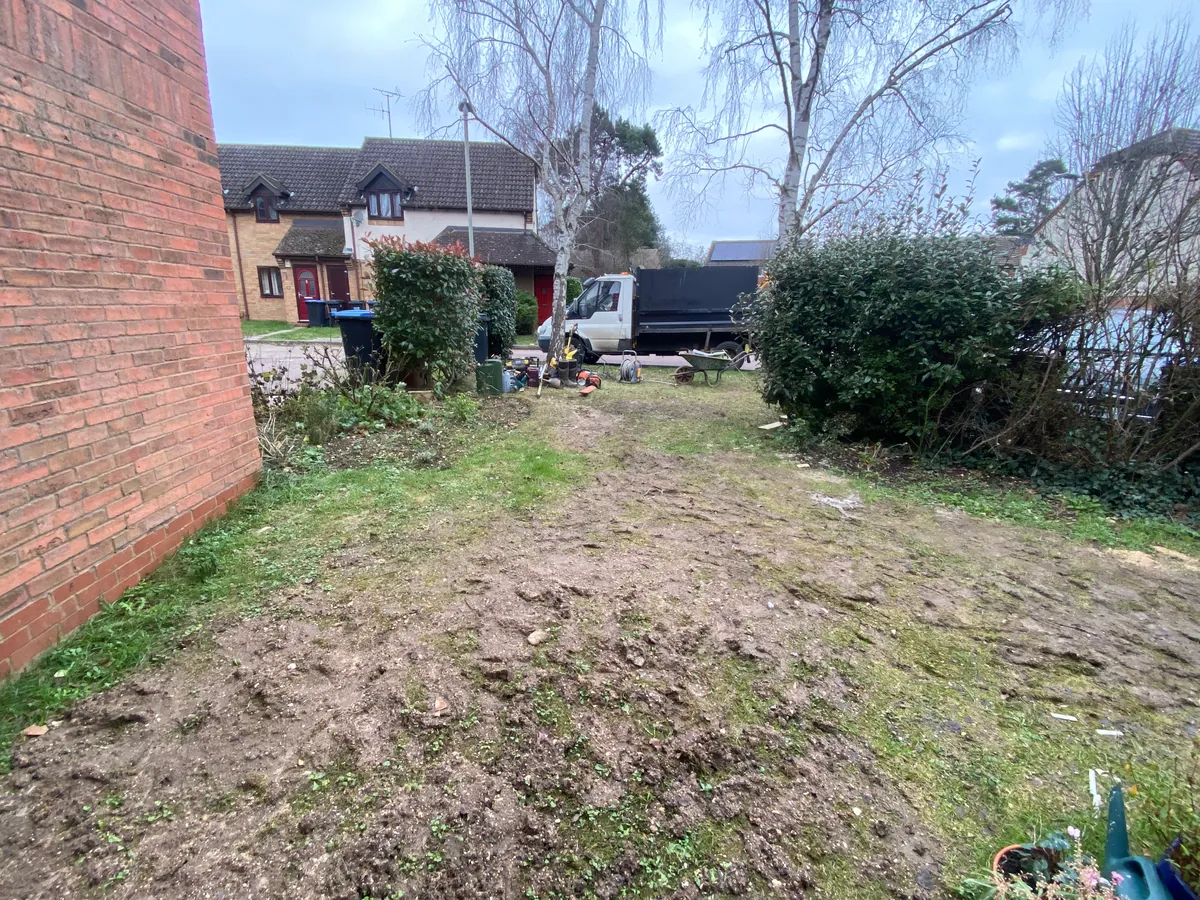
In Welwyn, a front garden sloped steeply down towards the house and had turned to mud. We split it into two level tiers with a heavy-duty timber sleeper retaining wall between them. That wall is what made the levels possible.
What decides how big a levelling job is?
The slope is only part of it.
| What we look at | Why it matters |
|---|---|
| How far the ground falls | More fall means taller walls, or more tiers |
| How much soil has to leave | Every load out has to be dug, moved and taken away |
| Access to the back garden | A narrow gate or no side access means a smaller digger and more trips |
| Where the soil and materials can sit | If the drive has to hold both, the soil goes out a bit at a time |
| The walls | Usually the biggest part of a sloping garden |
| Where the water goes | Levelling changes how rain runs off, so it needs somewhere new to go |
| What goes on top | Lawn needs topsoil back. Paving needs a full base |
Where does all the soil go?
It's moved to the front by digger or barrow, then taken away in skips or a grab lorry, a lorry with a crane arm that lifts the soil straight off the drive.
Access is the thing that catches people out. In Leighton Buzzard, a garden we levelled so the grandchildren could play safely had no side access, just a back gate about 100 metres round from the drive and only 750mm wide. We took the gate off to get our smallest digger through. Everything went in and out through that gate: the rubble out, the stone in.
On another sloping garden, we dug and finished the top first, then the bottom. Dig the bottom first, and there's no way to get materials up to the top. The drive had to hold the dug soil and the new materials, so the soil went out a bit at a time, in more lorry and skip runs than the garden's size would suggest.
Do you need planning permission to level a garden?
Usually not for a small change. The Planning Portal says raising your garden a small amount is unlikely to need permission, but raising it by more than 30cm may, because it can affect drainage and the neighbours. Rules are tighter for listed buildings and conservation areas, and they vary, so check with your council.
Two other things to watch:
- The damp-proof course. This is the waterproof layer low in your house wall. Ground and paving should finish at least 150mm below it, about two bricks. Building the ground up against the house can bridge it and let damp in.
- Boundaries. A fence isn't built to hold soil back, so raised ground next to one needs its own retaining edge.
What we'd do
We'd measure the slope and find the damp-proof course before drawing anything. Those numbers rule most layouts in or out.
Then we'd look hard at whether the whole garden needs to be level. Often it doesn't. A level patio and a gently sloping lawn can be all a family needs, with one low wall instead of three. That leaves more of the budget for the parts you'll use most. On a steeper slope, two lower walls usually work better than one tall one, and they're easier to step between.
We'd also plan the access and where the dug soil goes before the price, not after. It's the part most likely to make a levelling job harder than it looks. There's more on choosing the layout in sloping garden ideas, and on where a patio fits in patios on a sloping garden. Here's how we design and build whole gardens.
Questions people ask
Can I level a sloping garden without retaining walls?
Only if the slope is gentle. Then the lawn can be reshaped into a softer slope that meets a level patio. Anywhere one level sits noticeably above another, something has to hold the higher ground back, even if it's only a low edge of sleepers.
Do I need to buy topsoil to level a garden?
Sometimes. We keep the existing topsoil and put it back on top. You only buy more if the garden is being built up a lot, if there wasn't much topsoil to begin with, or if it's poor. Subsoil should never be used as the top layer for a lawn.
Will a levelled lawn sink?
Not if the fill was compacted in thin layers. Soil tipped in and raked flat settles unevenly, and the dips show once the grass is down. Where we can, we keep paving on firm, undug ground and keep fill for lawn and beds.
Does levelling a garden affect drainage?
Yes. A slope sheds rain on its own. A flat garden doesn't. So a levelled lawn still needs a gentle fall away from the house, and a retaining wall needs a way to let water out from behind it.