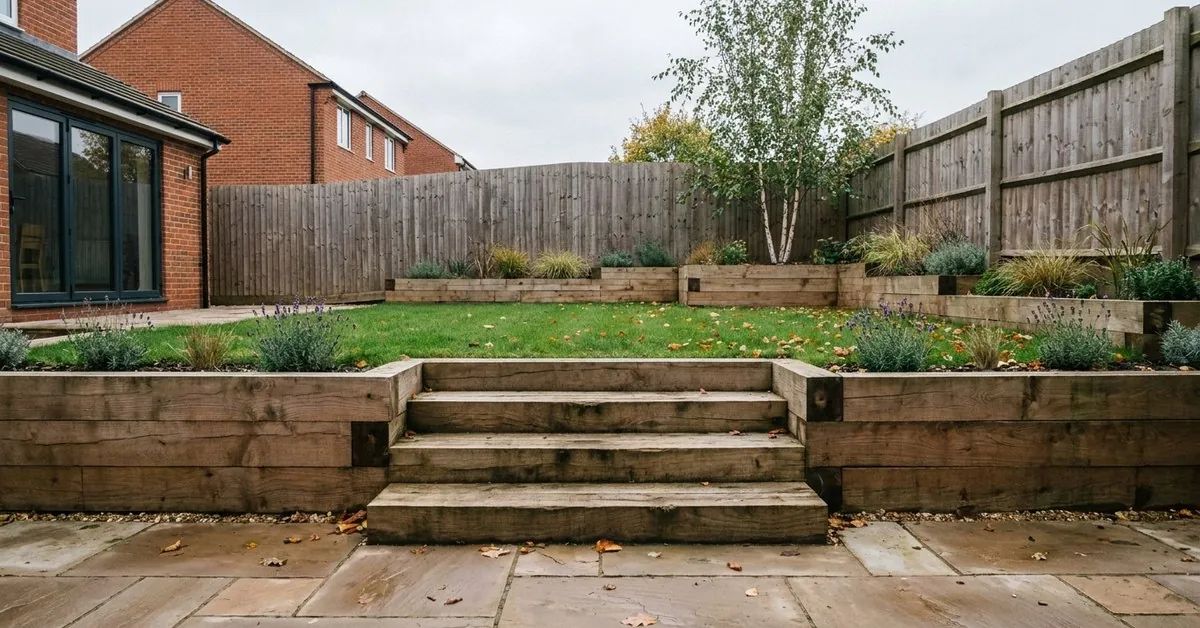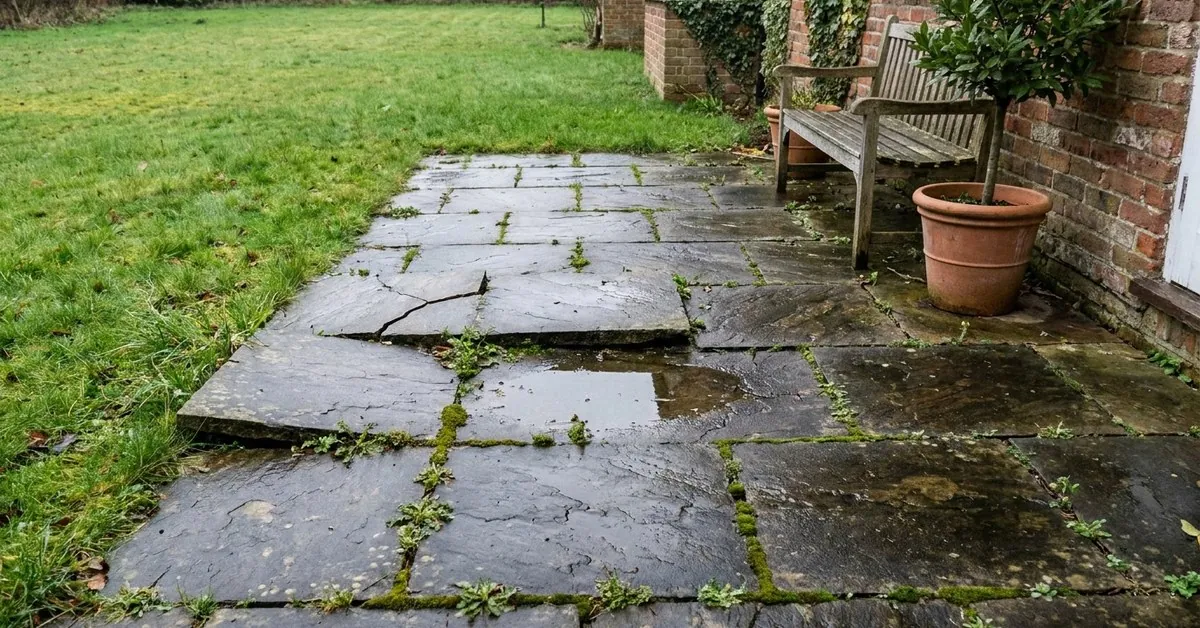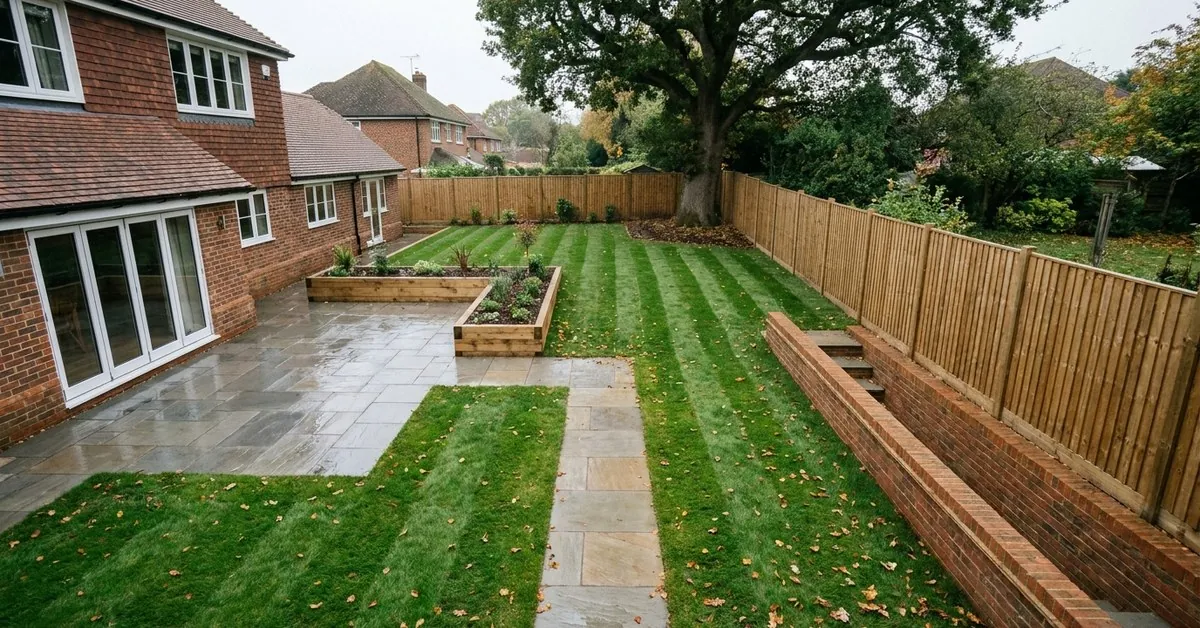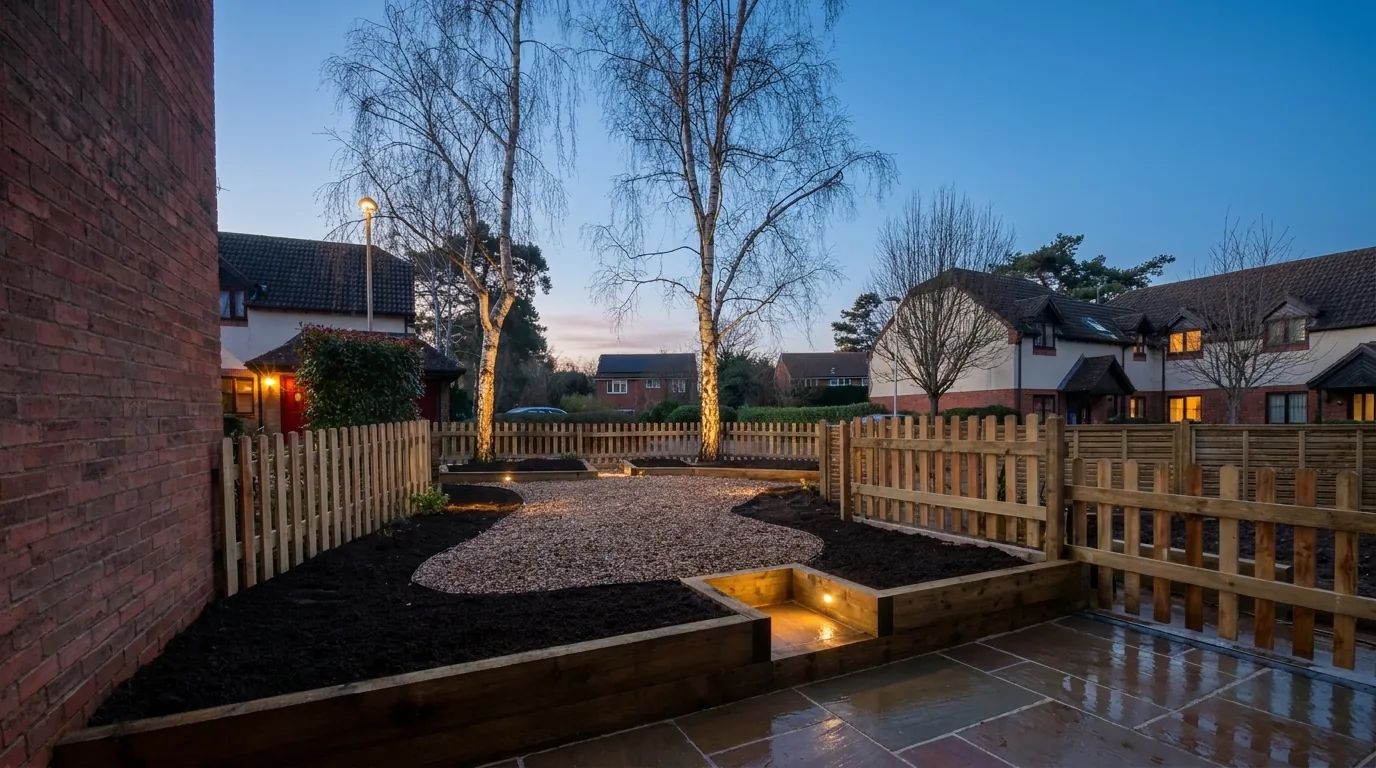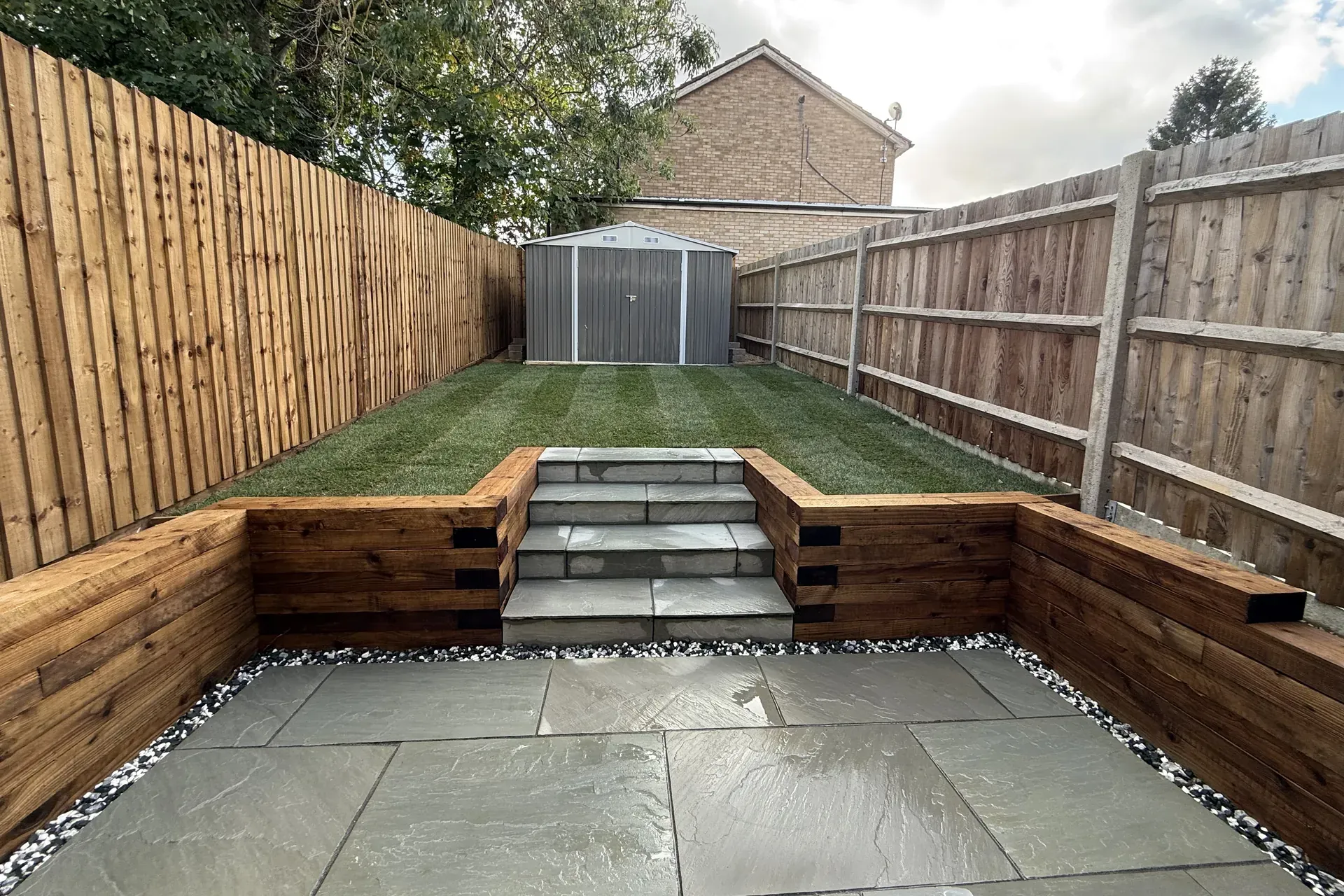
Your garden needs a retaining wall wherever the ground is higher on one side of something you're building, like a patio cut into a slope. Even a 20 to 30cm step needs something holding the soil back. Only flat ground, or a gentle slope you can regrade to meet the patio, gets away without one.
"Do we really need a wall?" is a fair question. From the house, a retaining wall can look like a lot of brick for a bit of soil. But soil doesn't stay where you leave it. Without something holding it back, a bank slowly slumps onto whatever is in front of it.
When does a garden need a retaining wall?
Almost every time the ground changes level next to something you build.
The usual case is a patio. A patio has to be fairly flat, with a slight slope away from the house so rain runs off. On a slope, that means cutting into the ground on the high side. That leaves a bank of soil at the edge of the new patio, and the bank needs holding.
It doesn't always mean a tall wall. Sometimes it's just 20 or 30cm: a low edge of sleepers or brick along the back of the patio. It's still a retaining wall. Leave it out and you get a patio with a step up to mud, and soil washing onto the stone every time it rains.
| Your garden | What it usually needs |
|---|---|
| Flat | No wall. The patio sits in the lawn |
| A gentle slope | Often no wall. We can regrade the lawn so it runs down to meet the patio |
| A patio cut into a slope | A low retaining edge along the high side, often 20 to 30cm |
| A bigger drop, or terraces | A proper retaining wall, with a footing and drainage behind it |
| A tall wall, a drive above it, or a wall near a road | An engineer's design, and sometimes the council's approval |
When can you get away without one?
On flat ground, there's nothing to hold back.
On a gentle slope, there's often another way. Instead of cutting a hard edge, we reshape the lawn so it runs gradually down and meets the patio at the same height, with no bank to hold back.
It can help the budget, too. In Luton, on a narrow garden that climbed away from the house, we built sleeper walls round the patio but kept the lawn above it sloped rather than terraced. It kept the job to budget and still gave them a flat patio and a new lawn.
What stops a retaining wall falling over?
Water, more than anything. Wet soil is heavy, and water that builds up behind a wall pushes on it. That's usually what makes a wall lean, bulge or crack.
So every retaining wall we build has a way out for the water behind it:
How a retaining wall lets the water out
- FootingA concrete foundation under the wall, to stop it sinking or tipping.
- Pea shingleSmall, rounded gravel packed behind the wall. Water runs through it easily, instead of sitting in the soil.
- Perforated pipeA pipe full of small holes along the bottom of the shingle, which collects the water and carries it away.
- Weep holesSmall gaps through the base of the wall that let the water out.
What sits on top of the wall matters as much as its height. A low wall with a drive above it is pushed much harder than a taller one holding up a flower bed. It's one of the first things we ask.
Do you need planning permission or an engineer?
For most garden retaining walls, no. But there are three lines to know:
- Planning is about the wall's own height. The Planning Portal says a wall over 1 metre next to a road, or over 2 metres elsewhere, needs permission. A terrace built up more than 30cm above the ground can need it too. Listed buildings and conservation areas are stricter, so check with your council.
- Near a road. A retaining wall within about 3.7 metres of a street and more than 1.37 metres high on the street side needs the council's approval before it's built, under section 167 of the Highways Act.
- Holding up a building. If the wall supports a house's foundations, building regulations apply.
There's no law requiring an engineer for an ordinary garden wall. Our own rule is stricter. Building guidance for brick and block retaining walls covers walls holding back up to about 1.7 metres of soil. Anything taller, on unusual ground, carrying a drive, or close to a road, we have designed by a chartered structural engineer before we build it. Past the guidance, anyone would be guessing.
Which wall lasts longest?
Brick and stone, built properly, outlast timber. Sleepers are warmer and quicker to build, but they rot in the end.
How fast depends mostly on drainage: wet soil packed against sleepers rots them far quicker. In our experience, a sleeper wall with proper drainage lasts 10 years quite easily, and often longer. Our post on sloping garden ideas compares sleepers, brick, stone and gabions (wire cages filled with stone) in more detail.
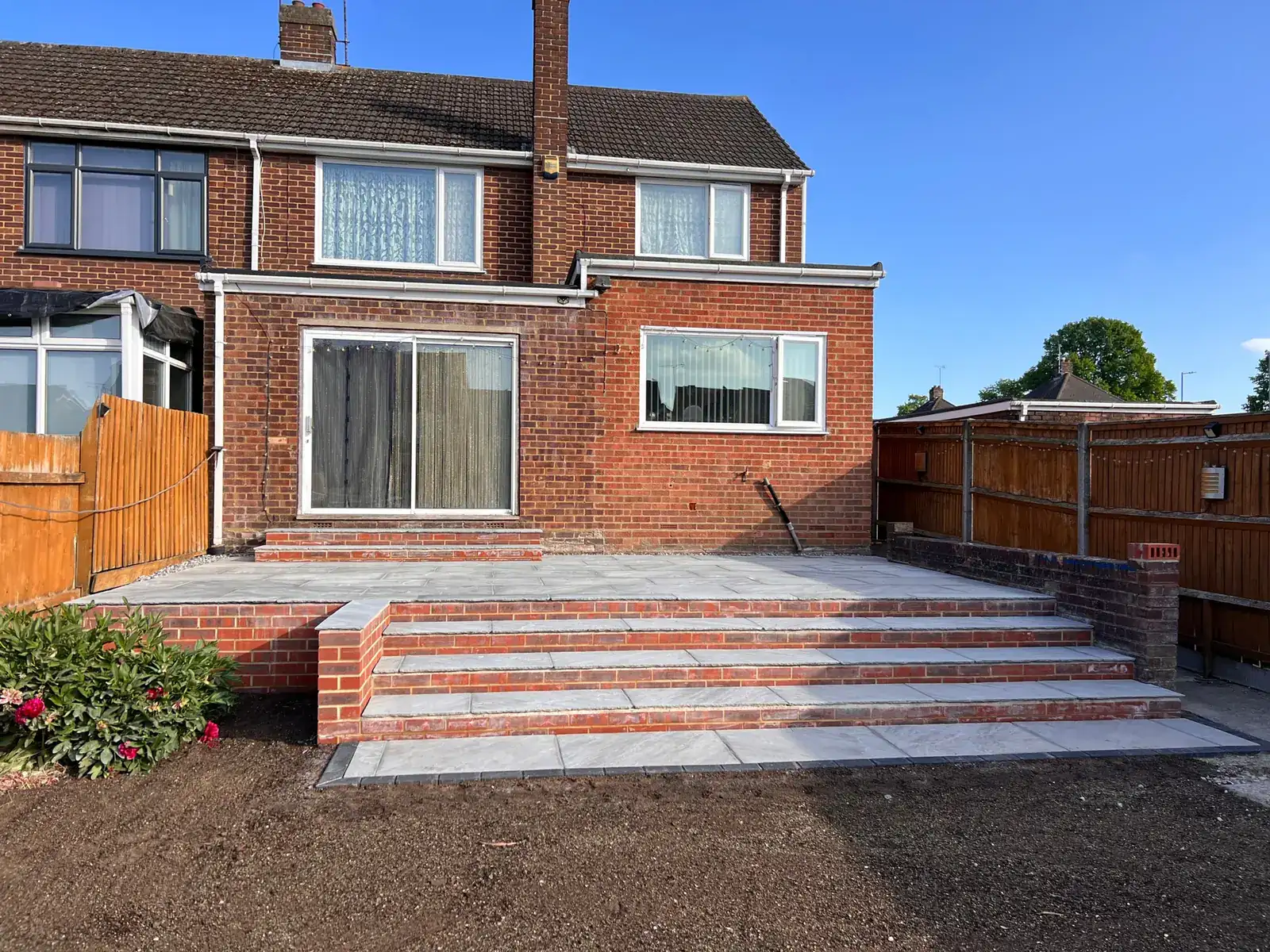
On another Luton job, a terrace sat nearly a metre above the lawn with nothing holding its edge, and the slabs on it rocked underfoot. For a drop that size, right by the house, we built a load-bearing retaining wall in solid brickwork, matched to the house, with wide brick steps down to the garden.
What we'd do
Assume you'll need some kind of edge wherever the patio cuts into a slope, and plan it in from the start. A low wall designed in looks deliberate. One added after the soil has started creeping onto the patio never quite does.
Then spend on what you can't see. The footing and the drainage behind a wall decide how long it stands, more than anything you can see. Ask anyone who quotes you what goes behind it, and how the water gets out.
And if the drop is big, or there's a drive above it, ask whether the wall is engineer-designed. If the answer is "it'll be fine", that's worth a second opinion. Our garden design and build starts with the levels.
Questions people ask
How high can a garden retaining wall be without planning permission?
Up to 1 metre next to a road, and up to 2 metres elsewhere, according to the Planning Portal. A wall near a road that's more than 1.37 metres high also needs the council's approval, and listed buildings and conservation areas are stricter.
Why is my retaining wall leaning?
Usually it's water. Without drainage behind it, wet soil builds up pressure and pushes the wall over. A missing or shallow footing, or extra weight on top like a drive, can do it too. A leaning wall rarely straightens itself, so it's worth having it looked at.
Can you use sleepers for a retaining wall?
Yes, for low walls and raised beds they work well and look warm and natural. They need drainage behind them like any wall, or the timber rots faster. For bigger drops, or right by the house, brick or block is the stronger choice.
Do I need a retaining wall for a patio on a slope?
Almost always, on the high side. Cutting a patio into a slope leaves a bank at its edge, and that bank needs holding back, even if it's only 20 or 30cm. On a gentle slope, regrading the lawn to meet the patio can sometimes do the job instead.