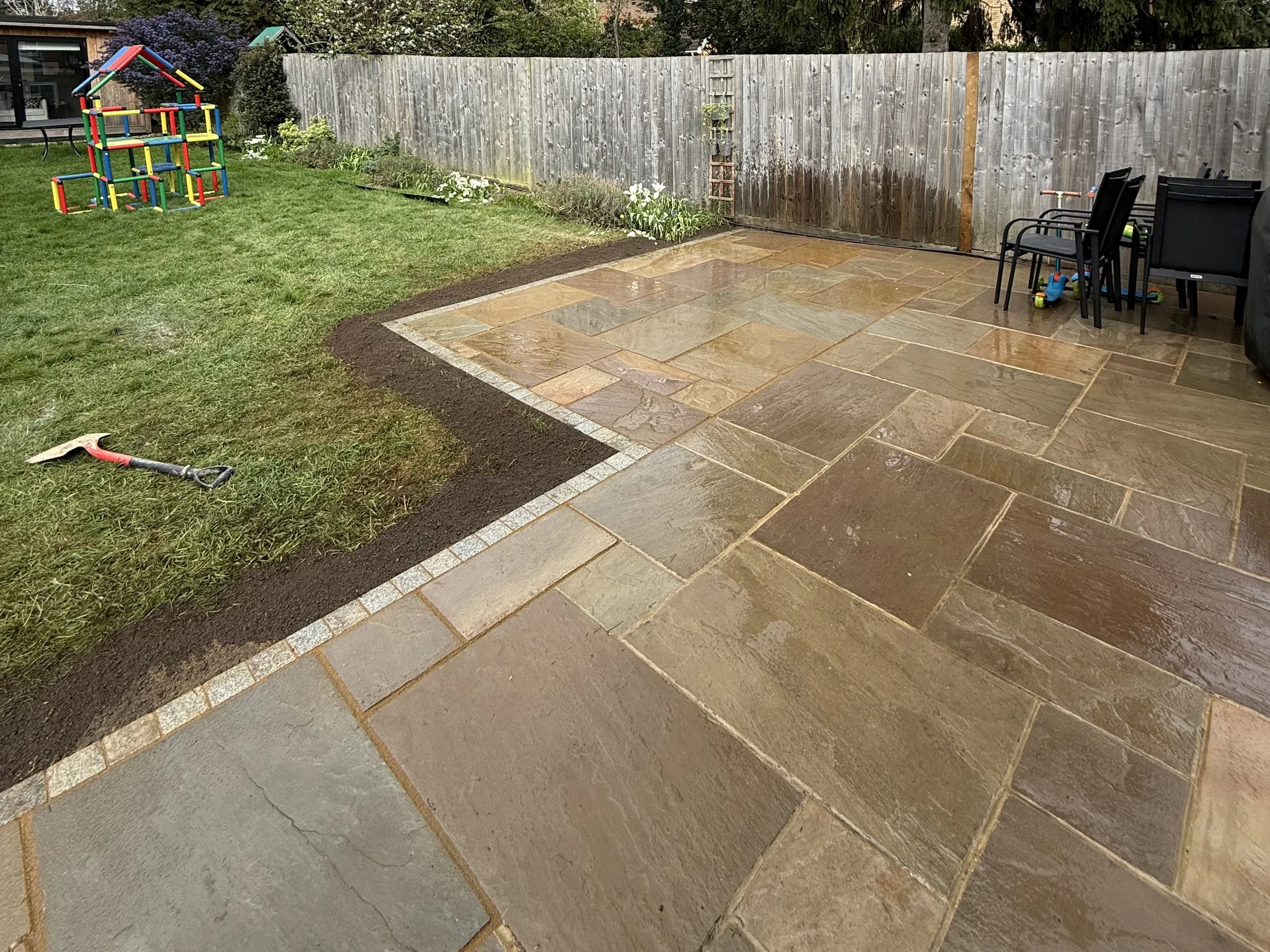
A patio guarantee only passes to a new owner if its wording says so. Some go with the house, and others only protect the person who paid for the work. Ask the seller for the certificate and the original agreement before you complete, then check the firm is still trading and whether anything has happened that breaks the terms.
A new patio or drive is a nice thing to find on a house you're buying. It's also something you can't see under. It might have a decade of cover left, or none, and the only way to find out is the paperwork.
Does a patio guarantee pass to a new owner?
Not automatically. A guarantee is a promise from the firm that did the work, and its wording decides who can use it. Look for words like "transferable", "passes to the new owner" or "goes with the property". If it's written to a named customer and says nothing about selling, ask the firm in writing before you rely on it.
Under the Consumer Rights Act 2015, work has to be done with reasonable care and skill, but that duty comes from the contract between the firm and whoever paid them. Don't assume it carries over to you. Your solicitor can tell you where you stand.
What should you ask the seller for?
Your solicitor will normally get a property information form from the seller, which asks about guarantees and warranties. That solicitors' guide says the documents themselves should still be read. So ask for the paper, not just a tick on a form.
- The guarantee certificate, with the dates each part runs to.
- The agreement or quote, which should say what was built, how deep and with what.
- The firm's full name and company number, so you know who gave the guarantee.
- Any claims or repairs so far, and any photos taken during the build.
- Anything dug or built nearby since, like a cable trench, a new wall or an extension.
- How the rain drains, if a front drive has been laid or replaced.
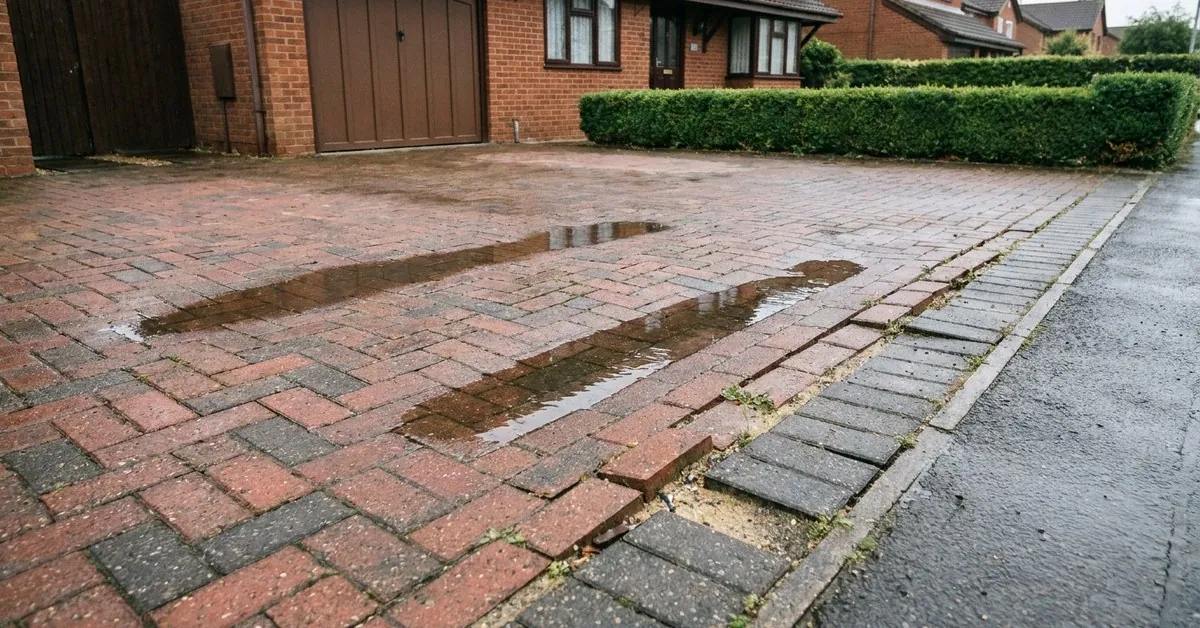
That last one matters for a different reason. In England, government guidance says a front drive over 5 square metres needs planning permission unless the surface lets water through, or the water drains to a border, a lawn or a soakaway on the property. Mention it to your solicitor if you can't tell. Here's where the water should go on a driveway.
Is the guarantee still worth anything?
Three quick checks tell you most of it.
Is the firm still trading? Search the name on the free Companies House register. If the firm has closed down, its guarantee usually goes with it, unless the paperwork shows it's backed by an insurer. A guarantee from one person rather than a company is harder to check.
Which part does it cover? Ten years on what? A guarantee can cover the surface, the base underneath or only the materials. We go through this in what a landscaping guarantee should actually cover.
Has anything broken the terms? Guarantees have conditions, and you can inherit a problem you didn't cause. A van parked on a patio built for walking on, or a trench dug next to it, can affect the cover.
Ask how long is left too. Workmanship faults tend to show early, so a short workmanship guarantee can be nearly gone by the time you move in.
How can you tell if it was built properly?
Go and look after heavy rain, or run a hose on it for a few minutes, and the surface will tell you a lot.
| What you see | What it can mean |
|---|---|
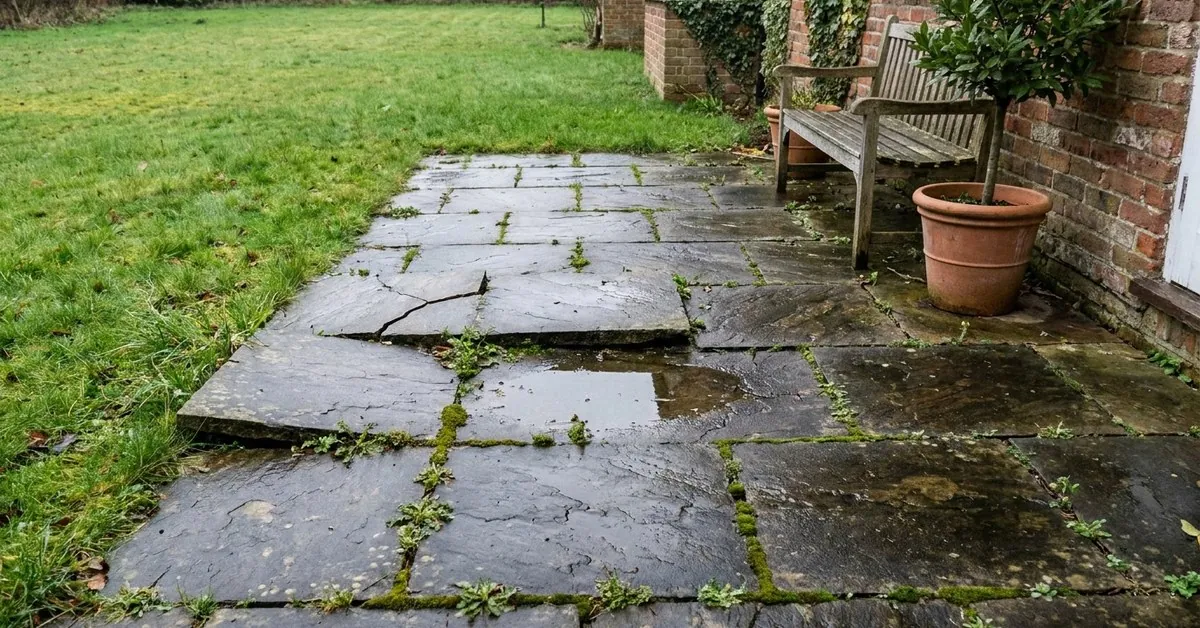
| A slab that rocks, or a hollow sound when you tap it | The base has failed under it |
| Dips, or a puddle in the same place every time | The base has sunk, or the slope is wrong |
| Water running towards the house | The fall (the gentle slope for the rain) is the wrong way |
| Less than two bricks between the paving and the damp-proof course (the waterproof layer low in the wall) | It's too high against the house, and damp can get in |
| Air bricks (the small vented bricks low in the wall) partly buried | Air under the floor can't move |
| One side of a block drive dropping, with gaps between the blocks | The edge wasn't held in concrete |
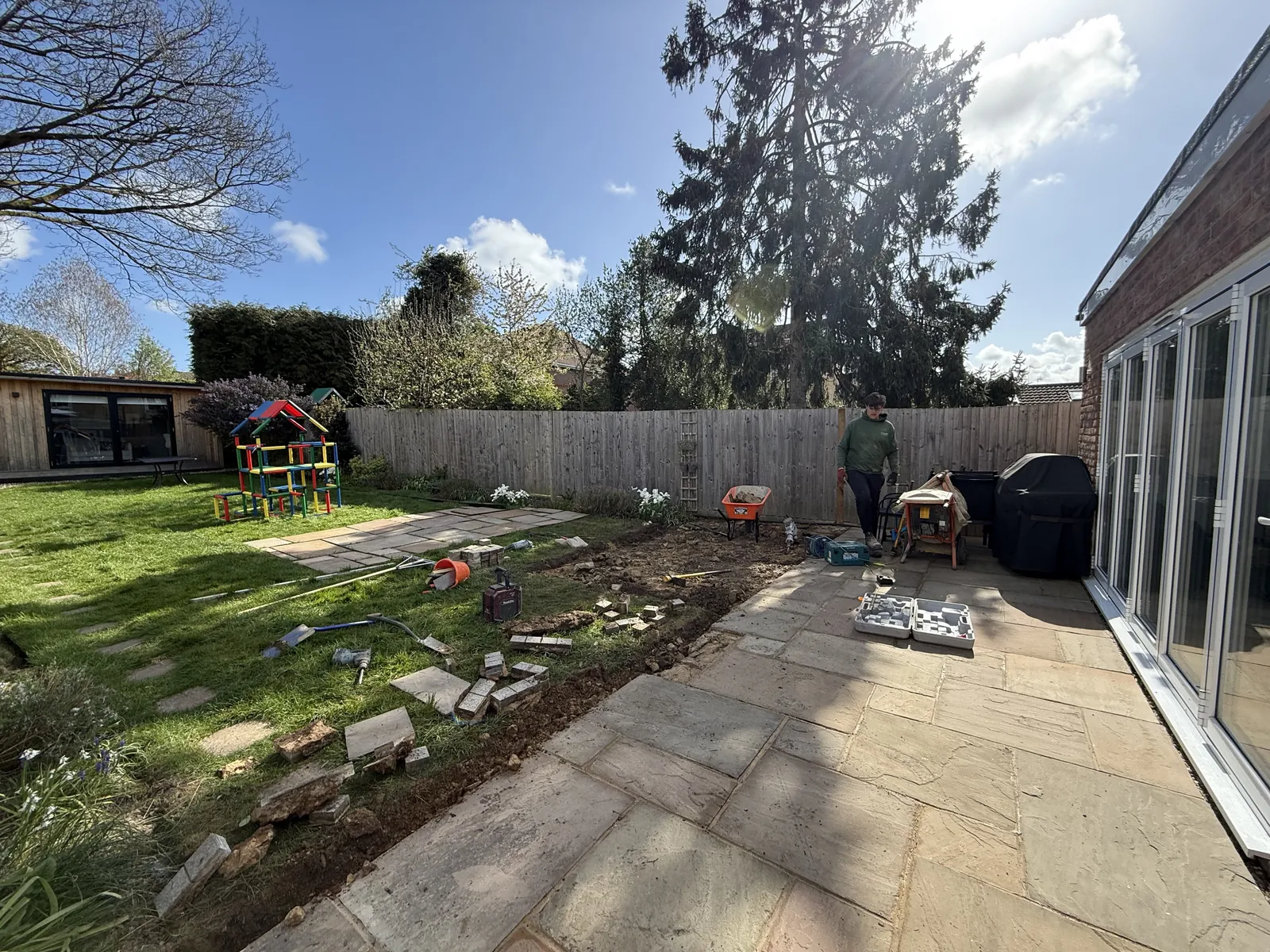
New doesn't mean well built. Our Harpenden patio repair was a job another firm had laid only a year before, and it was already sinking. When we lifted the slabs, there was 20mm of stone under them at most, and parts sat on bare mud.
If you've spotted a problem before you complete, raise it with your solicitor.
What if it's already going wrong?
Don't let anyone lift it first, or nobody can see what failed. Then:
- Take dated photosAfter rain, when dips and puddles show up most clearly.
- Tell the firm in writingInclude the certificate reference, and explain that you're the new owner.
- Let them look at itA fair firm will tell you whether it's covered, and why.
- Find out what's under itIf there's no cover, or the firm has gone, find out what's under it before you pay to fix the surface.
If nothing's covered, you still have options. We've quoted for a client who moved into a house with a block drive full of dips and bumps. The quote was to lift them, take out what was underneath and rebuild the base first. If that's where you are, here's when a patch repair will hold.
Bought a new build? Ask the developer what their warranty says about the paving and the garden, and don't assume it's covered. We see a lot of snagging on new-build gardens: poor grass, and patios that aren't big enough.
What we'd do
Get the paperwork before you complete, because it's far easier to ask a seller for documents than to track them down a year later. Then keep it with the house paperwork, so you can hand it on too.
And if it matters to the sale, ask the firm directly. One email saying "we're buying this house, does your guarantee pass to us?" gets you an answer in writing.
If we built it, the answer is yes. Our guarantees go with the house, and you're covered for the rest of the dates on the certificate, with nothing to register. That's two years on workmanship and ten years on the base under your paving. The two conditions on the ten years stay the same: don't load it beyond what it was built for, and nobody else digs or builds within 1 metre of the base. Bought a house we worked on and don't have the agreement? Ask us and we'll send you a copy.
Questions people ask
Do I need to register a guarantee when I buy the house?
It depends on the firm, so read the wording or ask them. Some want to be told about a new owner, and some need nothing at all. Ours needs nothing registered. Either way, telling the firm you've moved in means they know who to speak to.
The seller has lost the certificate. What now?
Ask the seller who laid it, then ask the firm for a copy. A firm that issued a certificate should have a record of it. If nobody can name the firm or find any paperwork, it's safest to treat it as having no guarantee.
Does a guarantee cover a drive that dips because of the ground?
Usually not. Clay shrinking in a dry summer or roots drying the soil is the ground itself moving, and that's normally one for your buildings insurance. A structural guarantee is for the base that was built giving way. Our guide to landscaping guarantees explains the difference.
Can I get a new guarantee on a patio someone else built?
Not usually without rebuilding it. Nobody can honestly guarantee a base they haven't seen or laid. What we'd guarantee is what we rebuild ourselves.