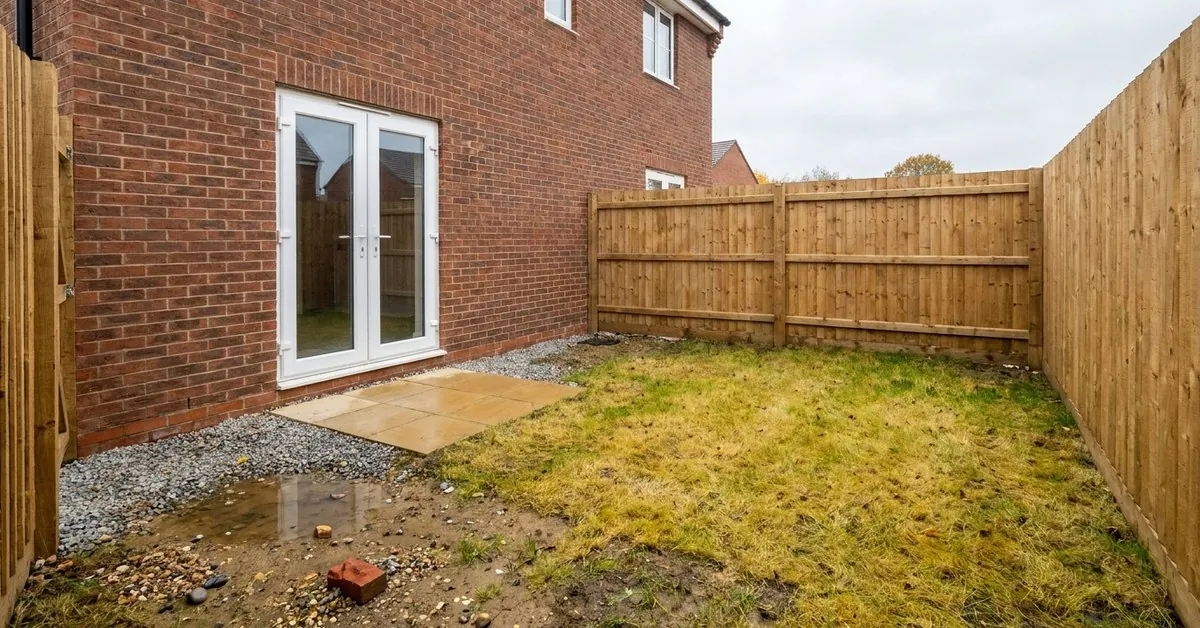
Most new-build garden problems start under the grass. Turf is often laid over buried rubble and clay squashed hard by site machines, so it floods in winter and cracks in summer. Report anything that looks like a defect to your builder first, then fix the ground and drainage, size the patio for how you'll use it, and lay the lawn last.
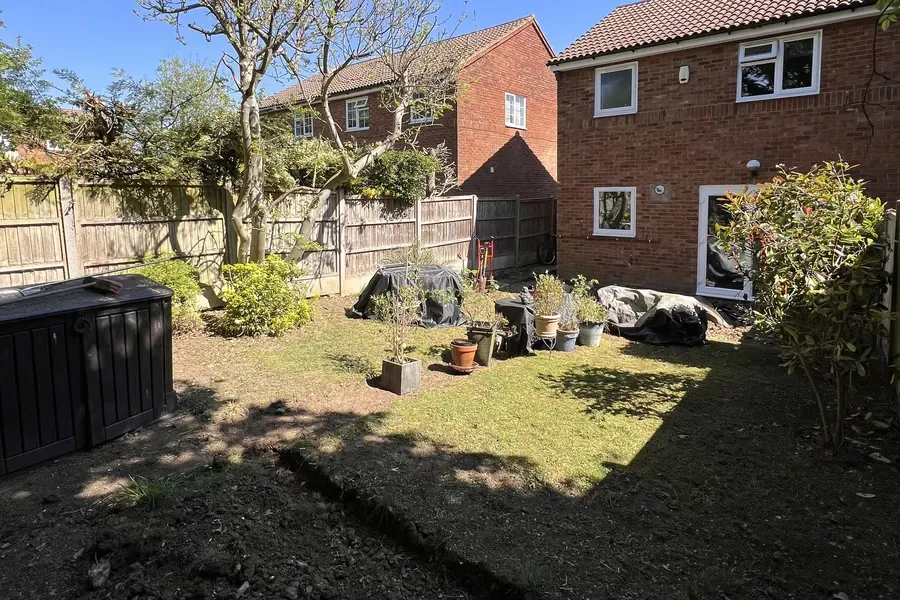
You've got the keys, and the garden looked fine on handover day. Then the first wet winter arrives. The lawn turns to puddles, the grass dies off in patches, and every hole you dig for a plant hits broken brick.
We see this a lot. As Chris puts it: "In a lot of the new builds, there's quite a lot of snagging involved. A lot of the grass isn't very good, and the patios aren't big enough." (Snagging is the list of small faults a builder puts right after handover.) Here's why it happens, and what to fix first.
What are the most common new-build garden problems?
These are the ones we come across on new-build estates, from Leighton Buzzard to Milton Keynes:
| What you see | Why it happens | What fixes it |
|---|---|---|
| A lawn that floods in winter | Clay ground, squashed hard by diggers and lorries, so rain sits on top | Break up the ground, sort where the water goes, then fresh topsoil and turf |
| Grass that dies in patches | Turf laid on a thin layer of soil over rubble, so roots can't get down | Dig out the rubble, then fresh topsoil and new turf |
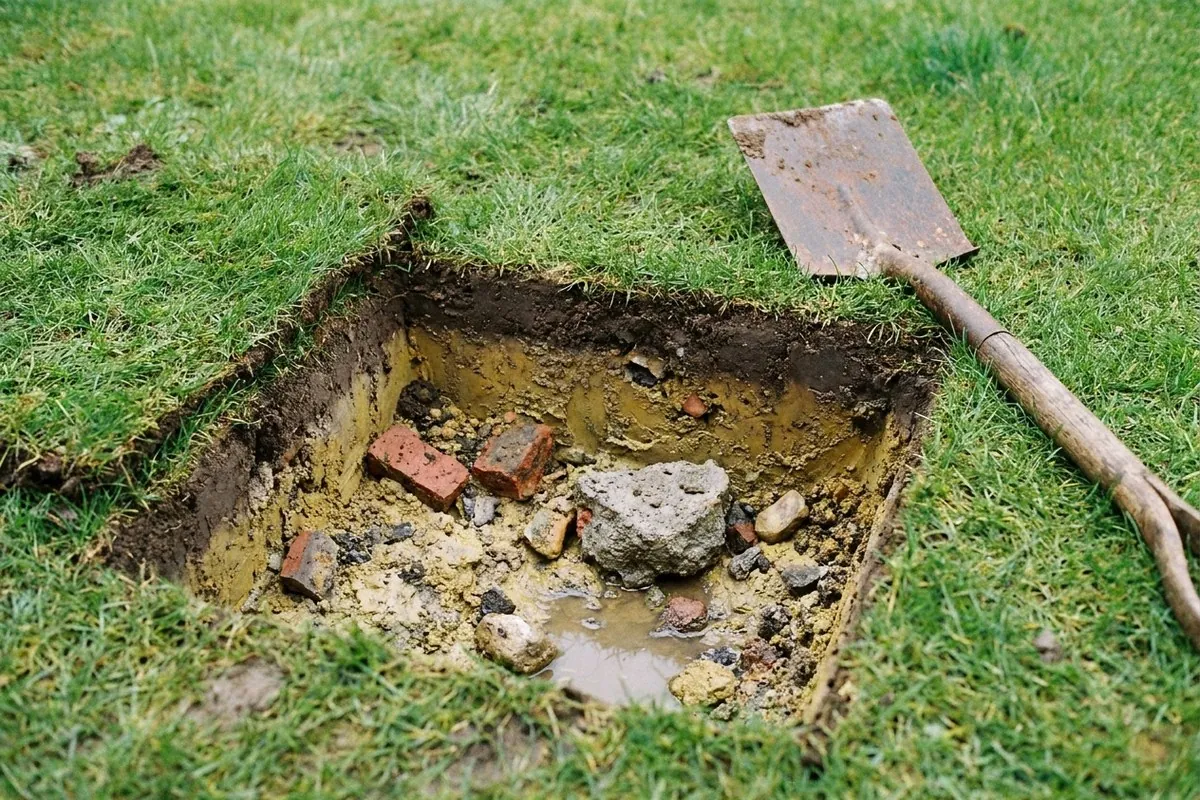
| Stones and brick when you dig | Building waste buried under the garden rather than taken away | Dig it out wherever anything will be built or planted |
| A patio too small for a table | The builder lays a strip, not a space you can sit in | Extend it, sized for your furniture |
| Slabs that rock or sit uneven | A base that's moving, or slabs not bedded properly | Lift them, put a proper base in, relay |
| Gravel everywhere | Loose stone borders with nothing to hold them in | Edging to keep the stone in, or plant the border instead |
| A garden that slopes towards the house | The plot was never levelled, so rain runs back to the house | Change the levels, sometimes with a low retaining wall (a wall that holds back soil) |
Why is my new-build lawn so bad?
Usually because of what's under it, not the grass.
While the houses go up, the garden is part of the building site. Diggers, dumpers and skips run over it for months. That squashes the air out of the soil, so water can't drain through and roots can't push down. The RHS describes the same thing in its guide to new-build gardens: site traffic compacts the subsoil, and builders may bury waste under the new soil. A thin layer of topsoil goes on top, then the turf.
On one new build we were asked to look at, the owners had relaid their turf more than once, because the grass was so bad. Every time they dug, they pulled up more rubbish: rubble, and even old vapes. The ground was heavy clay. It flooded in winter and cracked in summer. A family with two young children and a dog had barely been able to use the garden.
On another new build we quoted, buried rubble was stopping the grass growing, and the builders had even turfed over part of a flower bed, right up to the wall.
Can I get my builder to fix my new-build garden?
Sometimes, so ask before you spend anything. Many new homes come with an NHBC Buildmark warranty. For the first two years after you complete, the builder is responsible for putting right defects you report to them. Whether a waterlogged lawn counts as a defect is a grey area, so check your policy and put it in writing.
What should you fix first in a new-build garden?
Work from the ground up. Each job sits on the one before it.
- Report itAnything that looks like a defect, to the builder in writing, with photos.
- Watch where the water goesAfter a wet spell, see where it pools, which way it runs, and whether it heads for the house.
- Ground, drainage and levelsRubble out, the squashed ground broken up, and the water given somewhere to go. If the garden slopes towards the house, the levels change now.
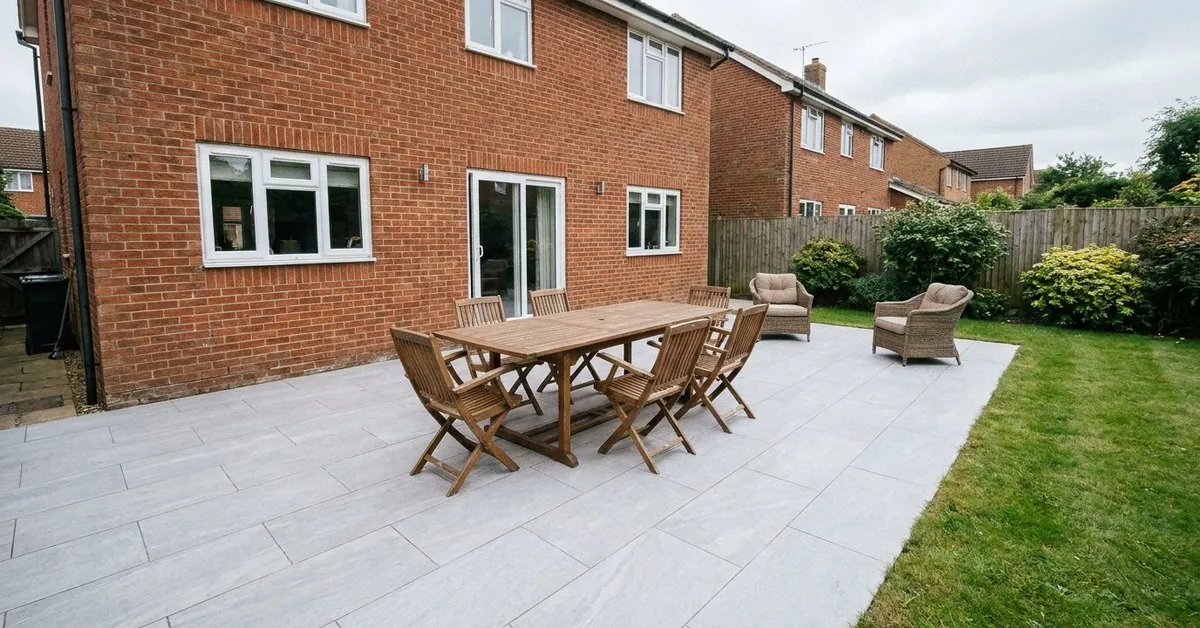
- The patio, sized for realBig enough for your table with the chairs pulled out, laid on a proper base.
- Edges and bordersEdging to hold stone and beds in place, so nothing spills onto the paving or the lawn.
- Lawn and planting, lastFresh topsoil and new turf once the heavy work is done, so nothing tramples it.
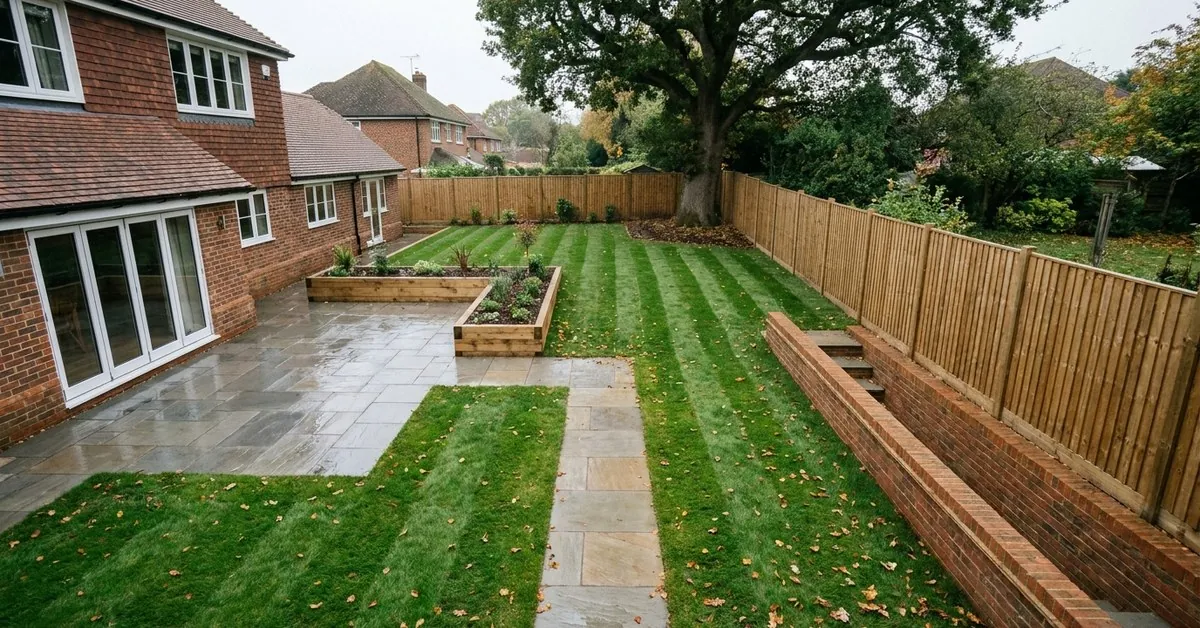
Two things to know on the levels. Ground and paving by the house must finish at least 150mm below the damp-proof course, the waterproof layer low in the wall. And a garden that rises away from the house sometimes needs splitting into two flat levels. That's what we planned for one new-build garden that climbed just over a foot (about 30cm) from the house to the back. Our guide to levelling a garden explains how that works.
Is a new-build patio big enough?
Usually not for a table and chairs. New-build patios tend to be a narrow strip outside the back doors.
It can often be extended to match. For one family who had just moved in, we planned to extend the patio by two rows of slabs matching the builder's concrete flags, so a table and chairs would fit, with a matching path down the side to a corner for two sun loungers. Here's how big a patio should be for the way you'll use it, and how we match the new slabs to the old.
Check the existing slabs first. On one new build we looked at, the paving was uneven and some slabs moved underfoot. New slabs laid next to old ones that are already moving just spread the problem, so we'd lift any that rock and relay them on the same base as the new ones.
Under every patio we lay a membrane, a sheet that keeps the soil out of the base, then 100mm of compacted crushed stone, then a full 40mm bed of mortar under each slab. That's what stops slabs rocking and sinking, as we explain in why patio slabs sink.
What about the loose stones everywhere?
Loose gravel round the patio, with nothing to hold it in, spreads onto the paving and into the lawn. In one garden we looked at, the children picked the stones up and threw them about.
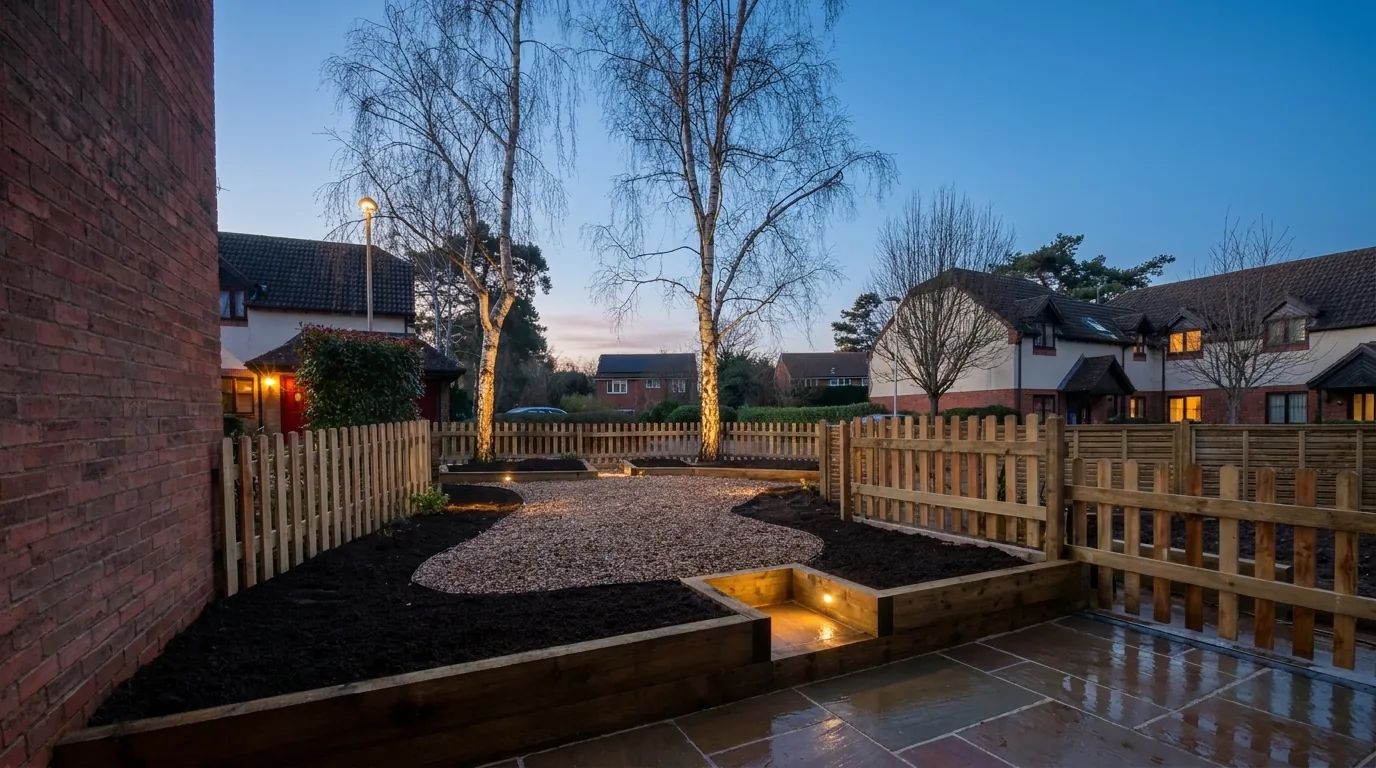
There are two fixes. Keep the stone and give it a proper edge: on one job we planned a metal edging strip along every border, to stop the stones working into the soil and grass. Or take the stone out and plant the border. With young children or a dog, that's often the better choice.
What we'd do
Fix the ground before you spend anything on the surface. It's tempting to relay the turf, because it's the bit you can see. But new turf on rubble and squashed clay goes the same way as the last lot.
So we'd dig out the rubble wherever anything will be built or planted, break up the flattened ground and work out where the water goes. Then the patio, sized for how you'll actually use it, and the lawn last, on fresh topsoil. If the budget means doing it in stages, design the whole garden first, so the patio isn't dug up later for drainage or a step. Our guide to what a full garden renovation involves walks through the order, and the problems are much the same as in a garden left behind by an extension.
If you'd like someone to look at yours, see how we design and build gardens.
Questions people ask
Why is my new-build garden waterlogged?
Usually because site machines squashed the ground hard during the build, often on clay, with only a thin layer of topsoil on top. Rain can't drain through, so it sits on the lawn. Spiking the lawn with a fork helps a little. A proper fix means breaking up the ground and giving the water somewhere to go.
Is it normal to find rubble in a new-build garden?
It's common, though it shouldn't be. Broken brick, concrete and other site waste often end up under the topsoil. Under a lawn or a patio it causes problems, so we dig it out wherever anything will be built.
Should I re-turf my new-build garden?
Not on its own. If the grass failed because of rubble, clay or poor drainage, new turf on the same ground fails the same way. Sort the ground first, add fresh topsoil, then turf.
How long should I wait before doing my new-build garden?
Long enough to see it through a wet spell, so you know where the water sits. If you're inside the builder's two-year warranty period, report any defects in writing before you change anything. Then plan the whole garden, even if you build it in stages.