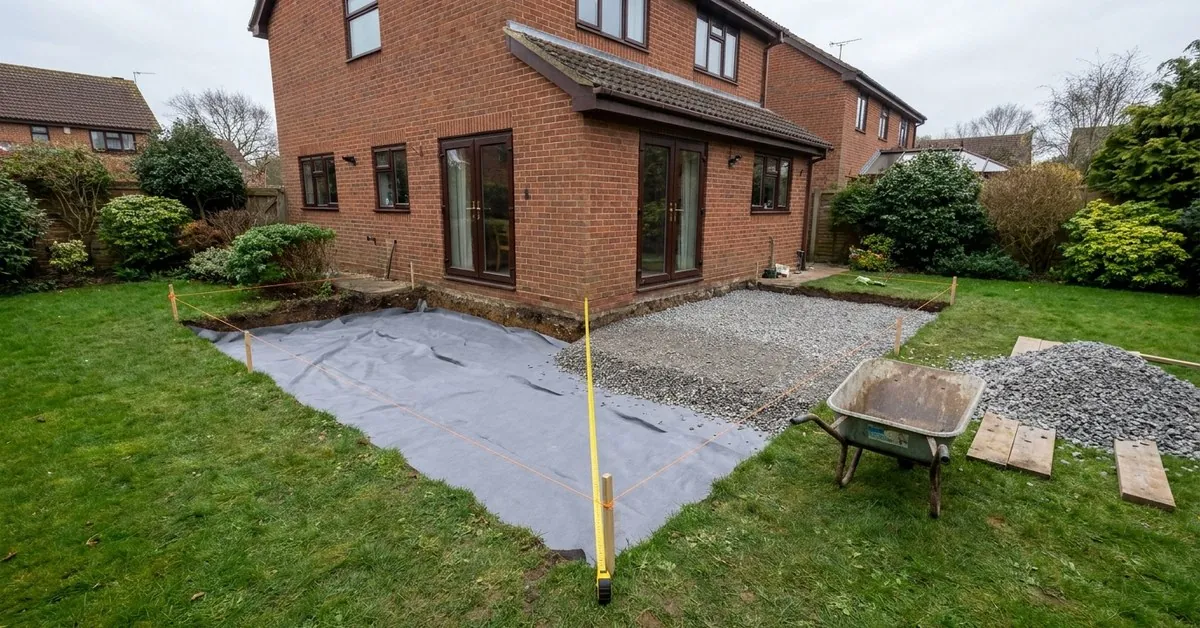
Patio quotes are so different because two firms are usually pricing two different jobs. The gap sits in the parts you can't see once it's finished: how deep they dig, what goes underneath, how the slabs are bedded, where the rain goes, how easy your garden is to get into, and what's been left out. Get each part in writing and the gap usually explains itself.
"Another company quoted much less." We hear that, and it's a fair thing to tell us. When totals are far apart, it's hard to know whether the dear one is overcharging or the cheap one is cutting corners.
Usually it's neither. It's two different patios with the same name.
Why are patio quotes so different?
Because most of a patio is work you never see. One sits on a dug-out, compacted stone base with mortar under the whole of every slab. Another sits on a thin layer of stone and a few blobs of mortar. On the day they're finished, you can't tell them apart. Later on, you usually can.
A quote is a price for a list of decisions: how deep, with what, where the water goes, what's included. If they aren't written down, you can't see which ones each firm made.
To give you something to compare against, here's what goes under ours. A membrane on the dug-out ground, a sheet that keeps soil and stone apart. Then 100mm of MOT Type 1, a crushed stone, compacted in layers. Then a 40mm bed of mortar laid full under every slab, the slabs, and the joints filled once the bed has set. Why each layer matters is in why patio slabs sink.
Where does the difference usually hide?
| Part of the job | What to ask | Why it moves the price |
|---|---|---|
| Dig-out and base | How deep, which stone, compacted in layers? | More depth means more digging, more stone and more soil to take away. It's also what keeps it flat. |
| Membrane | Is there one under the whole patio? | A small line, and an easy one to drop. Without it, soil works up into the stone. |
| Bedding | A full mortar bed, or dabs (a few blobs under each slab)? | A full bed takes more mortar and more time. Dabs look the same when it's new. |
| Drainage | Which way does it slope, and where does the water end up? | A drain or a soakaway (a buried pit the water drains into) is a real line on a quote, and some quotes don't have one. |
| Levels | Any steps or walls? How far below the damp-proof course, the waterproof layer near the bottom of your wall? | A sloping garden needs steps, a wall or more digging. A quote that ignores the slope is pricing a flatter garden than yours. |
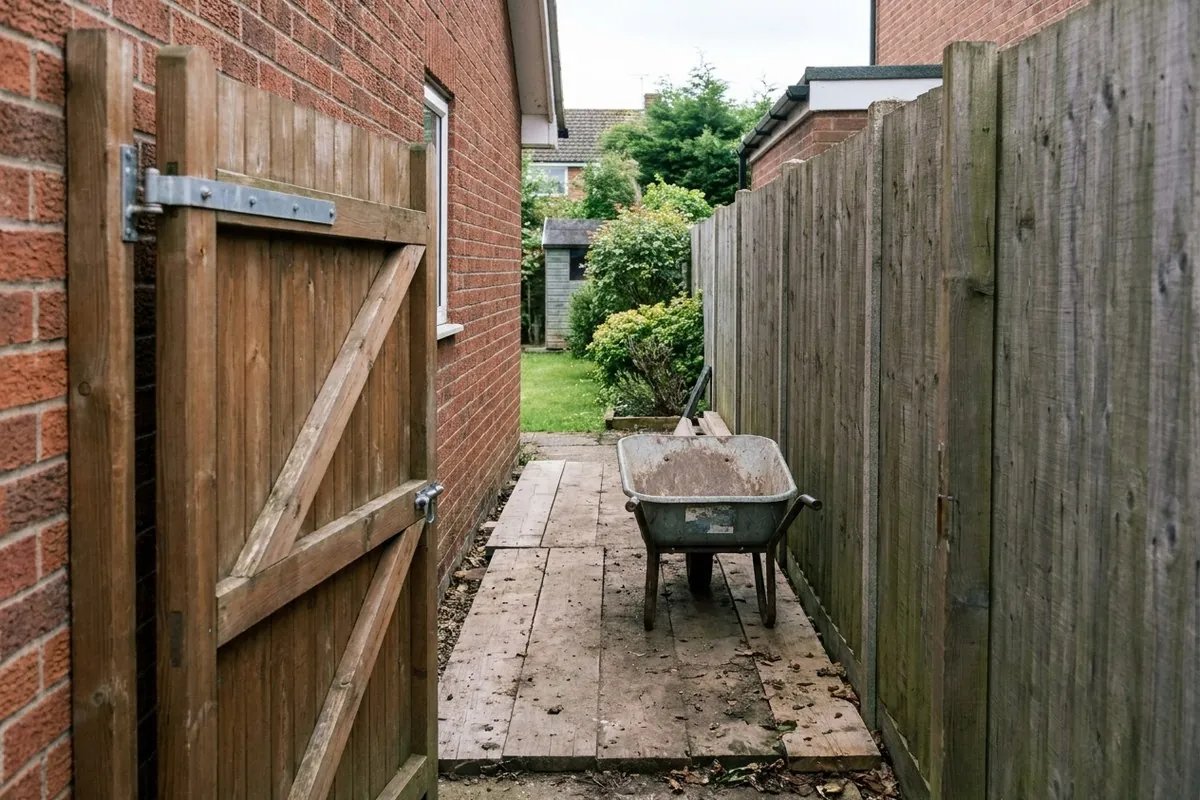
| Access | How will everything get in and out? | A wide side gate and a digger is one job. Every load by barrow, or through the house, is another. |
| Waste | Who takes it away, and is it in the price? | Digging out a patio makes tonnes of soil and rubble, and getting rid of it properly costs money. |
| Edges and the old patio | Is lifting the old one included? The edging? Putting the lawn back? | Often where the patio stops on one quote and carries on on another. |
| The price | Is it fixed, and does it include VAT? | An estimate can start lower because it can still go up. |
Is the cheaper quote cutting corners?
Not always. Rule out two other reasons first.
It may be a smaller job. The area measured tighter, the steps not counted, the path round the side left off. Two quotes for "the patio" often cover different amounts of patio.
The dearer one may include more than you need. If ours ever does, tell us, and we'll take it off and explain what that changes.
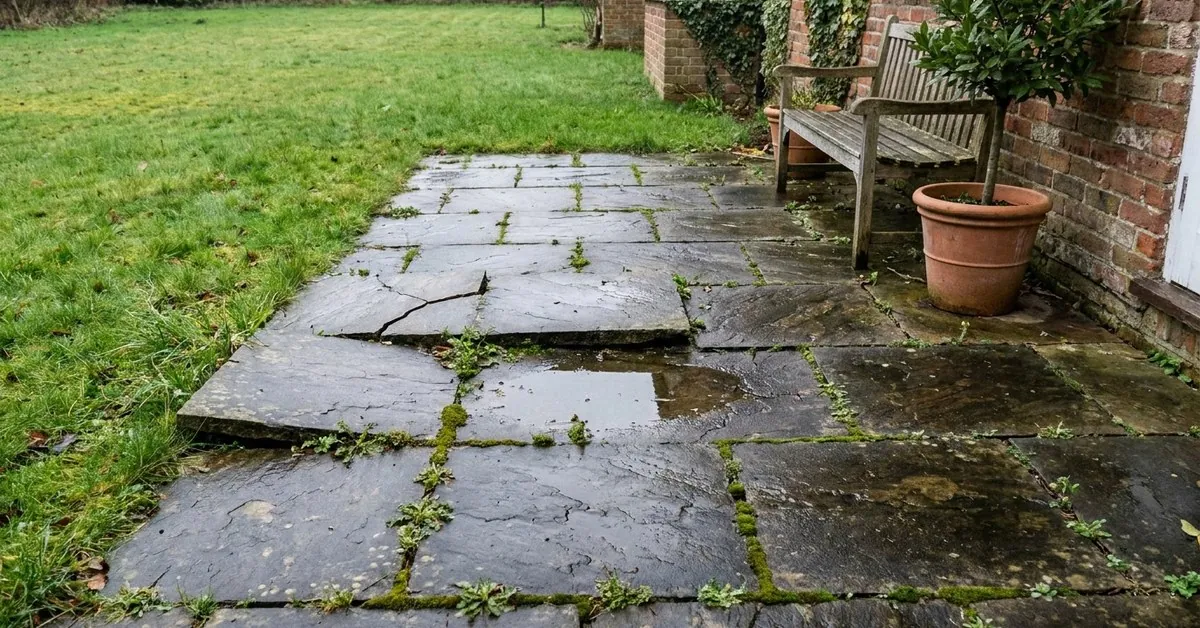
Or it may be the base. It's the easiest part to thin, because nobody sees it. One Harpenden patio we repaired had been laid by another firm a year before and was already sinking. Under the slabs there was 20mm of crushed stone at most.
If two firms are pricing the same written specification and one is cheaper, take the cheaper one. We mean that. Just make sure it really is the same.
Why does the price change once someone measures up?
A number over the phone is a guess at your garden. "The quote seems too high," one homeowner told us, before anyone had measured anything. A fair reaction, but that figure hadn't been worked out yet.
A visit finds what a phone call can't: the slope, the drain cover in the middle, the old concrete under the lawn, and the way in. On a sandstone patio and steps in Luton there was no side access, so every load went in and out through the house. On a Leighton Buzzard garden, everything came through a back gate 750mm wide, and we took the gate off to get our smallest digger in.
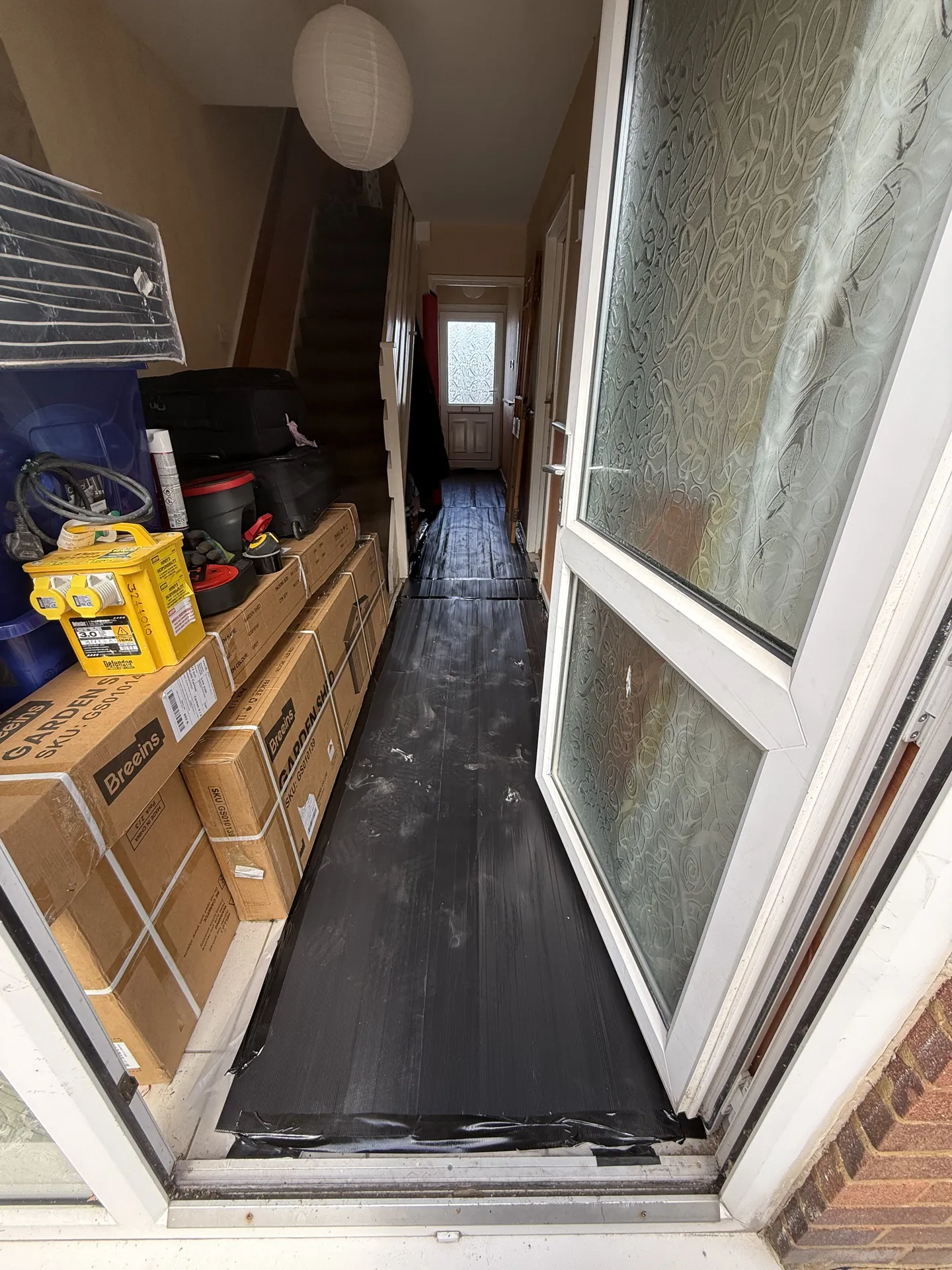
Same slabs, very different jobs. That's why we price from a measured visit, and once you've signed, the price never goes up without your signature.
How do you compare two patio quotes fairly?
Compare the lists, not the totals. As Ashford Borough Council's advice on choosing a builder puts it: "compare like for like and examine what the contractor is providing in the price."
- Same briefGive every firm the same brief: the area, the material you'd like, and what's coming up.
- In writingAsk each one for the work stage by stage, with the depths, not just a total.
- Side by sideGo through them part by part, using the table above.
- Ask about the gapsWhere one quote lists something and the other doesn't, ask whether it's included.
- Then the priceOnly now compare the totals.
The full set of questions to ask anyone who quotes is in questions to ask a landscaper. What's guaranteed in writing is part of what you're paying for too: here's what a landscaping guarantee should cover.
What we'd do
Put the totals aside until the lists match. A cheaper quote with no depths on it isn't cheaper yet. It's unfinished.
Our quotes list every stage in plain English: the dig, the base, the bed, the slabs, the joints, the drainage, the waste. We're not always the cheapest. The list is there so you can check us against anyone else, line by line. Got another quote and want a second opinion? Show us. We'll point out where it isn't the same job, and say so if it is.
Questions people ask
Should I just go with the middle quote?
Not on the total alone. The middle figure tells you nothing about what's in it. Line the quotes up part by part first, and the choice is usually much clearer.
Is it rude to tell a landscaper I'm getting other quotes?
No. It's normal, and a good firm expects it. It can help, because they'll know to put the detail in writing so you can compare.
Why did one firm price over the phone and another insist on a visit?
A phone figure is a guess based on what you've described. A visit finds the slope, the access, the drainage and what's under the lawn. Only a measured price can be a fixed one.
Can I ask a landscaper to match a cheaper quote?
You can ask. But if the price drops and the work stays the same, ask what changed. The honest way to bring a price down is to change the job: a different material, a smaller area, or doing it in stages.